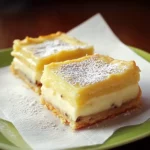
Ingredients
For the Puff Pastry Layers:
- Puff Pastry: 2 sheets (approx. 375g or 13.2 oz total) of good quality, all-butter puff pastry, thawed if frozen.
- Why: All-butter puff pastry offers superior flavour and a flakier, more tender texture compared to those made with other fats. The quality of your pastry is paramount for that signature crispness.
For the Vanilla Custard Filling:
- Full-Cream Milk: 750ml (3 cups)
- Why: Full-cream milk provides richness and a creamy mouthfeel essential for a luscious custard. Low-fat milk will result in a less satisfying texture.
- Caster Sugar (Superfine Sugar): 150g (¾ cup)
- Why: Caster sugar dissolves more easily than granulated sugar, leading to a smoother custard. Its fine texture is ideal for delicate baking.
- Cornflour (Cornstarch): 75g (¾ cup, sifted)
- Why: This is our primary thickening agent. Sifting prevents lumps and ensures a silky smooth custard. The quantity is crucial for a custard that sets firmly enough to slice but remains tender.
- Egg Yolks: 5 large, from free-range eggs if possible
- Why: Egg yolks contribute richness, colour, and flavour, and also aid in thickening. Free-range yolks often have a deeper colour.
- Unsalted Butter: 60g (¼ cup or ½ stick), cut into small cubes
- Why: Added off the heat, butter emulsifies into the custard, giving it a beautiful sheen, extra richness, and a smoother mouthfeel.
- Vanilla Bean Paste or Pure Vanilla Extract: 2 teaspoons of paste OR 1 tablespoon of extract (or 1 vanilla bean, split and scraped)
- Why: This is the star flavour! Vanilla bean paste offers the visual appeal of vanilla seeds and a robust flavour. High-quality pure extract is also excellent. Avoid imitation vanilla essence.
For the Simple Vanilla Icing:
- Icing Sugar (Powdered Sugar): 200g (1 ½ cups, sifted)
- Why: Sifting is non-negotiable for a smooth, lump-free icing.
- Hot Water (or Milk): 2-3 tablespoons (approximately)
- Why: Hot liquid helps the icing sugar dissolve smoothly, creating a glossy finish. You’ll adjust the amount to get the perfect pourable, yet not too runny, consistency.
- Vanilla Extract (Optional): ½ teaspoon
- Why: A little extra vanilla in the icing reinforces the overall flavour profile.
- Passionfruit Pulp (Optional, for traditional Australian style): 1-2 tablespoons, strained of excess liquid, to replace some of the water.
- Why: This adds a tangy, fruity counterpoint that is very popular in Australian vanilla slices.
Instructions
Phase 1: Perfecting the Puff Pastry Base & Top
- Preheat & Prepare: Preheat your oven to 200°C (180°C Fan / 400°F / Gas Mark 6). Line two large baking trays with parchment paper.
- Unroll Pastry: Gently unroll your thawed puff pastry sheets. If they are much larger than your intended slice tin, you can lightly score them to the tin size now, or trim after baking. It’s often easier to trim once baked and crisp.
- Dock the Pastry: Place one sheet of pastry on each prepared baking tray. Using a fork, prick the pastry all over at roughly 1cm (½ inch) intervals. This is called ‘docking’ and it prevents the pastry from puffing up too much, ensuring flat, crisp layers.
- Bake the Pastry: Place the baking trays in the preheated oven. Bake for 15-20 minutes, or until the pastry is deeply golden brown and very crisp. Keep a close eye on it, as puff pastry can brown quickly. If it starts to puff up excessively in certain spots during baking, you can gently press it down with a fish slice or another flat utensil.
- Cool and Trim (if needed): Once baked, remove the pastry from the oven and let it cool completely on the trays. If you haven’t already, carefully trim one sheet of pastry to fit snugly into the base of your 20cm x 30cm (8×12 inch) slice tin. Trim the second sheet to the exact same size – this will be your top layer. Handle with care as baked puff pastry is delicate.
- Tip: Use the trimmings as a baker’s treat – they’re delicious crumbled over ice cream or just eaten as is!
- Line the Tin: Line your slice tin with parchment paper, leaving some overhang on the longer sides to act as “handles.” This will make removing the slice much easier later. Place the trimmed pastry base layer into the lined tin.
Phase 2: Crafting the Creamiest Vanilla Custard
- Combine Dry Ingredients: In a small bowl, whisk together the caster sugar and cornflour until well combined. This helps prevent the cornflour from clumping when added to the milk.
- Prepare Egg Yolks: In another medium bowl, lightly whisk the egg yolks.
- Heat Milk: Pour the milk into a medium to large heavy-bottomed saucepan. Heat over medium heat until it’s just steaming and small bubbles are forming around the edge of the pan. Do not let it boil vigorously.
- Temper the Eggs (Crucial Step): Gradually pour about half of the hot milk into the whisked egg yolks, whisking constantly as you pour. This is called tempering – it gently warms the yolks, preventing them from scrambling when added to the hot milk in the saucepan.
- Combine and Cook: Pour the tempered egg yolk mixture back into the saucepan with the remaining milk. Whisk in the sugar and cornflour mixture.
- Thicken the Custard: Cook over medium-low heat, whisking constantly and vigorously, especially around the bottom and edges of the pan to prevent sticking and lumps. The custard will gradually thicken. This can take 5-10 minutes. Bring it to a gentle boil and continue to cook, whisking, for 1-2 minutes after it starts bubbling. It should be very thick, like a pudding.
- Consistency Check: The custard is ready when it heavily coats the back of a spoon, and if you draw a finger through it, the line holds its shape.
- Add Butter and Vanilla: Remove the saucepan from the heat. Add the cubed butter and the vanilla bean paste (or extract) to the hot custard. Whisk until the butter is completely melted and incorporated, and the custard is smooth and glossy.
- Strain (Optional but Recommended): For an ultra-smooth custard, strain it through a fine-mesh sieve into a clean bowl. This will remove any tiny lumps or bits of cooked egg that might have formed.
Phase 3: Assembling Your Masterpiece
- Pour Custard: Immediately pour the hot, strained custard over the pastry base in your prepared tin. Use a spatula to spread it evenly, ensuring it reaches all corners. Work quickly as the custard will start to set.
- Add Top Pastry Layer: Gently place the second trimmed sheet of baked puff pastry on top of the hot custard, pressing down lightly to adhere it.
- Cool Down: Let the vanilla slice cool at room temperature for about 30-60 minutes. This initial cooling prevents too much condensation from forming.
- Chill Thoroughly: Once partially cooled, cover the tin loosely with plastic wrap (try not to let it touch the pastry top too much, or wait until after icing if you prefer). Transfer to the refrigerator and chill for at least 4-6 hours, or preferably overnight. This chilling time is crucial for the custard to set completely, allowing for clean slices. Do not rush this step!
Phase 4: The Crowning Glory – Icing the Slice
- Prepare Icing: Once the slice is thoroughly chilled and set, prepare the icing. In a medium bowl, place the sifted icing sugar.
- Add Liquid: Add 2 tablespoons of hot water (or milk, or passionfruit liquid if using) and the optional ½ teaspoon of vanilla extract. Stir vigorously with a spoon or small whisk until smooth.
- Adjust Consistency: The icing should be thick but pourable. If it’s too thick, add more hot water, ½ teaspoon at a time, until you reach the desired consistency. If it’s too thin, add a little more sifted icing sugar.
- Ice the Slice: Pour the icing over the top pastry layer of the chilled vanilla slice. Quickly spread it evenly using an offset spatula or the back of a spoon, right to the edges. Work fast, as the icing will begin to set.
- Optional Feathering (for a classic bakery look): If you want to create a feathered pattern, reserve a tablespoon of the white icing and mix it with a tiny drop of melted chocolate or food colouring. Or, melt 15-20g dark chocolate. Drizzle lines of this contrasting icing (or melted chocolate) horizontally across the white icing while it’s still wet. Then, drag a skewer or toothpick vertically up and down through the lines to create a feathered effect.
- Final Chill (Briefly): Return the iced vanilla slice to the refrigerator for at least 30 minutes to allow the icing to set completely.
Phase 5: Slicing and Serving
- Remove from Tin: Once the icing is set, use the parchment paper overhangs to carefully lift the entire vanilla slice from the tin onto a cutting board.
- Slice Neatly: For the cleanest cuts, use a large, sharp knife. Dip the knife in hot water and wipe it dry between each cut. Press down firmly rather than sawing. You can cut it into squares or rectangles, depending on your preference. Typically, a 20x30cm slice yields 12 generous portions or 16 smaller ones.
- Serve and Enjoy: Serve immediately and watch the delight on everyone’s faces!
Nutrition
- Serving Size: One Normal Portion
- Calories: 350-450