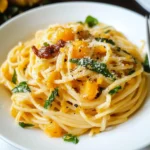
Ingredients
- For Roasting the Squash:
- Butternut Squash: 1 medium (about 2.5 – 3 lbs / 1.1 – 1.4 kg), peeled, seeded, and cubed into 1-inch pieces. This is the star, providing sweetness, color, and creamy texture.
- Garlic: 4-6 large cloves, peeled and left whole. Roasting garlic mellows its sharpness and brings out a sweet, nutty flavor.
- Fresh Sage Leaves: 10-12 large leaves. Sage and butternut squash are a classic pairing, offering an earthy, slightly peppery counterpoint.
- Olive Oil: 2-3 tablespoons, extra virgin. For coating the squash and garlic, promoting caramelization.
- Salt: 1 teaspoon, or to taste. Essential for bringing out all the flavors.
- Black Pepper: ½ teaspoon, freshly ground, or to taste. Adds a subtle kick.
- For the Pasta & Sauce Assembly:
- Pasta: 1 lb (450g) of your favorite type. Shells (conchiglie), penne, rigatoni, orecchiette, or even fettuccine work wonderfully as they hold the sauce well.
- Yellow Onion: 1 medium, finely chopped. Provides a savory base for the sauce.
- Vegetable Broth: 1.5 – 2 cups (360 – 480 ml). Used to achieve the desired sauce consistency.
- Heavy Cream or Full-Fat Coconut Milk: ½ cup (120 ml). For extra creaminess. For a lighter version, you can use half-and-half or unsweetened plant-based milk like oat or cashew, though the richness will be reduced. Coconut milk will impart a subtle coconut flavor.
- Nutritional Yeast (Optional but Recommended): 2-3 tablespoons. Adds a cheesy, umami depth, especially good if keeping it vegan or just wanting that flavor boost.
- Ground Nutmeg: ¼ – ½ teaspoon. A classic spice with squash that adds warmth. Start with less and add more if desired.
- Reserved Pasta Water: About 1 cup. The starchy water is gold for adjusting sauce consistency and helping it cling to the pasta.
- Butter or Olive Oil: 1 tablespoon, for sautéing the onion.
- Salt and Pepper: To taste, for final seasoning of the sauce.
- Optional Garnishes:
- Toasted Pepitas (Pumpkin Seeds): For crunch and visual appeal.
- Freshly Grated Parmesan Cheese (or vegan alternative): For an extra layer of savory flavor.
- Red Pepper Flakes: For a touch of heat.
- Extra Fresh Sage Leaves: Chopped or fried until crispy.
- A Drizzle of High-Quality Olive Oil or Truffle Oil: For an elegant finish.
Instructions
1. Prepare and Roast the Butternut Squash:
* Preheat your oven to 400°F (200°C). Line a large baking sheet with parchment paper for easy cleanup.
* In a large bowl, combine the cubed butternut squash, whole peeled garlic cloves, and fresh sage leaves.
* Drizzle with 2-3 tablespoons of olive oil, then sprinkle with 1 teaspoon of salt and ½ teaspoon of black pepper. Toss everything together thoroughly to ensure the squash and garlic are evenly coated.
* Spread the squash mixture in a single layer on the prepared baking sheet. Avoid overcrowding the pan; use two sheets if necessary. This ensures even roasting and caramelization rather than steaming.
* Roast for 30-40 minutes, flipping halfway through, until the squash is tender, fork-pierceable, and lightly caramelized around the edges. The garlic should be soft and fragrant.
2. Cook the Pasta:
* While the squash is roasting, bring a large pot of generously salted water to a rolling boil.
* Add your chosen pasta and cook according to package directions until al dente (tender but still with a slight bite).
* Crucial Step: Before draining the pasta, reserve at least 1-2 cups of the starchy pasta water. This water is invaluable for adjusting the consistency of your sauce later.
* Drain the pasta and set aside. You can toss it with a tiny drizzle of olive oil to prevent sticking if it will sit for more than a few minutes.
3. Sauté Aromatics:
* Once the squash is nearly done roasting, heat 1 tablespoon of butter or olive oil in a large skillet or Dutch oven over medium heat.
* Add the finely chopped yellow onion and sauté for 5-7 minutes, stirring occasionally, until softened and translucent, but not browned.
4. Create the Butternut Squash Sauce:
* Remove the roasted squash and garlic from the oven. Discard the sage leaves (they’ve imparted their flavor).
* Transfer the roasted squash and softened garlic cloves to a high-speed blender.
* Add the sautéed onions to the blender.
* Pour in 1.5 cups of vegetable broth, ½ cup of heavy cream (or coconut milk), nutritional yeast (if using), and ground nutmeg.
* Blend on high speed until the sauce is completely smooth and velvety. This might take 1-2 minutes depending on your blender. If the sauce is too thick, add a little more vegetable broth or some of the reserved pasta water, a few tablespoons at a time, until it reaches your desired consistency. It should be thick but pourable.
* Taste the sauce and adjust seasoning with salt and pepper as needed. Remember the pasta water is salty, so be cautious if you’ve already added a lot.
5. Combine Pasta and Sauce:
* Pour the blended butternut squash sauce back into the skillet or Dutch oven you used for the onions. Warm it gently over medium-low heat.
* Add the cooked pasta to the sauce. Toss gently but thoroughly to coat every piece of pasta.
* If the sauce seems too thick at this stage, gradually stir in some of the reserved pasta water until it loosens up to a glossy, coating consistency. The heat will also help the sauce meld with the pasta. Simmer for 1-2 minutes, allowing the pasta to absorb some of the sauce’s flavor.
6. Serve and Garnish:
* Divide the creamy butternut squash pasta among serving bowls.
* Garnish generously with your chosen toppings. Toasted pepitas, a sprinkle of Parmesan or vegan Parmesan, a dash of red pepper flakes, and a few fresh sage leaves all work beautifully. A final drizzle of good olive oil can also elevate the dish.
* Serve immediately and enjoy the warm, comforting flavors.
Nutrition
- Serving Size: One Normal Portion
- Calories: 550-650