Ingredients
Scale
For the Viennese Shortbread Biscuits (Makes approx. 20-24 individual swirls, for 10-12 filled biscuits):
- 250g (1 cup + 2 tbsp) Unsalted Butter: This is the star of the show. It must be at room temperature—soft enough that a finger press leaves an indent, but not so soft that it’s greasy or melting. This precise temperature is crucial for both creaming and for the dough being pipeable. Using unsalted butter allows you to control the final salt content of the biscuits.
- 50g (⅓ cup + 1 tbsp) Icing Sugar (Powdered Sugar): Icing sugar, not granulated, is essential. Its fine texture dissolves completely into the butter, creating a smooth, tender crumb without any graininess. It also helps prevent the biscuits from spreading too much.
- 225g (1 ¾ cups + 1 tbsp) Plain Flour (All-Purpose Flour): This provides the main structure for the biscuits. Be sure to measure it accurately, either by weight (recommended for baking) or by using the spoon-and-level method if using cups.
- 25g (3 tbsp) Cornflour (Cornstarch): This is the secret weapon for that melt-in-the-mouth texture. Cornflour has no gluten. By replacing some of the plain flour with it, you reduce the overall gluten development in the dough, which results in an incredibly short, crumbly, and delicate biscuit. Do not skip this!
- 1 tsp High-Quality Vanilla Extract: Vanilla complements the buttery flavour beautifully. Opt for a good quality extract or vanilla bean paste over artificial essence for a richer, more authentic taste.
For the Vanilla Buttercream and Jam Filling:
- 100g (½ cup minus 1 tbsp) Unsalted Butter: As with the biscuit dough, this must be properly softened to room temperature to achieve a light, fluffy, and lump-free buttercream.
- 200g (1 ½ cups + 2 tbsp) Icing Sugar (Powdered Sugar): This provides the sweetness and structure for the buttercream. Sifting it is highly recommended to avoid any small, stubborn lumps.
- ½ tsp High-Quality Vanilla Extract: For flavouring the buttercream.
- 1–2 tbsp Milk or Double Cream: This is used to adjust the consistency of the buttercream. Add it one tablespoon at a time until you reach a perfectly smooth and pipeable texture. The amount you need can vary depending on the temperature of your butter and kitchen.
- 4–5 tbsp Good-Quality Raspberry Jam: The quality of your jam makes a huge difference. A good preserve with a high fruit content will provide a much-needed tartness to cut through the richness of the butter in the biscuits and the cream. A seedless variety is traditional and provides a smoother eating experience.
Instructions
Part 1: Making the Pipeable Biscuit Dough
- Prepare Your Equipment: Preheat your oven to 180°C (160°C Fan / 350°F / Gas Mark 4). Line two large baking sheets with non-stick baking parchment. If you want perfectly uniform biscuits, you can use a pencil and a 5cm (2-inch) cookie cutter to draw circles on the parchment paper (on the underside, so the pencil doesn’t touch the dough), leaving at least 2 inches of space between them. This will be your piping guide.
- Cream the Butter and Sugar: In a large mixing bowl, or the bowl of a stand mixer fitted with the paddle attachment, place the softened unsalted butter and the icing sugar. Start on a low speed to combine them without creating a sugar cloud, then increase to medium-high. Cream them together for a good 3-4 minutes. The mixture should become very pale, light, and fluffy. This step incorporates air, which is vital for the light texture of the whirls. Scrape down the sides of the bowl once or twice to ensure everything is evenly mixed.
- Combine the Dry Ingredients: In a separate medium bowl, sift together the plain flour and the cornflour. Sifting is not just about removing lumps; it aerates the flours and helps them combine more evenly, contributing to a lighter final product.
- Incorporate the Flours: Add the sifted flour mixture and the vanilla extract to the creamed butter and sugar. Mix on a very low speed, just until the flour is incorporated and a soft dough forms. It’s crucial not to overmix at this stage. Overmixing will develop the gluten in the flour, resulting in a tough biscuit rather than a short, crumbly one. The final dough should be very soft, smooth, and easily pipeable.
Part 2: Piping and Baking the Whirls
- Prepare the Piping Bag: Prepare a piping bag fitted with a large open star nozzle (a Wilton 1M or 2D is perfect for this). Spoon the soft biscuit dough into the piping bag. Don’t overfill the bag; working with half the dough at a time is much more manageable.
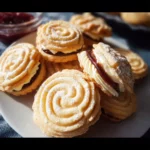
- Pipe the Whirls: Holding the piping bag vertically about half an inch above your prepared baking sheet, apply steady pressure. Starting from the centre of your guide-circle, pipe a tight spiral outwards until you fill the 5cm (2-inch) circle. End the swirl with a little flick to create a neat finish. Repeat for the remaining dough, ensuring you leave ample space between whirls as they will spread slightly.
- The Crucial Chill: Place the baking sheets with the piped whirls into the refrigerator to chill for at least 30 minutes (or up to an hour). This is arguably the most important step to prevent the biscuits from spreading into flat, shapeless discs in the oven. Chilling solidifies the butter, helping the whirls hold their beautiful piped shape during baking.
- Bake to Pale Perfection: Transfer the chilled baking sheets directly into the preheated oven. Bake for 13-15 minutes. The whirls are ready when they are a very pale, light golden colour around the edges but still pale in the centre. You are not looking for a deep golden brown. Over-baking will make them hard and crunchy, and you will lose that signature melt-in-the-mouth quality.
- Cool Completely: Remove the baking sheets from the oven and let the biscuits cool on the sheets for 5-10 minutes. They will be very delicate at this point. After 10 minutes, carefully transfer them using a palette knife or spatula to a wire rack to cool completely. They must be 100% cool before you attempt to fill them, otherwise the buttercream will melt instantly.
Part 3: Making the Filling and Assembling
- Prepare the Vanilla Buttercream: While the biscuits are cooling, make the filling. In a mixing bowl, beat the softened butter with an electric mixer until it’s smooth and creamy. Sift in the icing sugar and add the vanilla extract. Start mixing on the lowest speed until the sugar is incorporated, then increase the speed to high and beat for 3-5 minutes until the buttercream is extremely light, pale, and fluffy. If it seems too stiff, add the milk or cream one tablespoon at a time until you reach a soft, easily spreadable or pipeable consistency.
- Assemble the Viennese Whirls: Match the cooled biscuits into pairs of similar size and shape. Spoon your raspberry jam into a small bowl and give it a stir to loosen it. On the flat side of one biscuit in a pair, spread or pipe a small teaspoon of raspberry jam in the centre.
- Pipe the Buttercream: You can either spoon the buttercream on or, for a more professional finish, transfer the buttercream to a piping bag (you can use the same star nozzle or a small round one). Pipe a generous ring of buttercream around the jam on the same biscuit.
- Create the Sandwich: Gently place the second biscuit on top, flat side down, and press ever so slightly to sandwich them together, causing the filling to just peek out from the sides. Be very gentle as the biscuits are delicate.
- Final Flourish (Optional): For a classic bakery look, you can lightly dust the finished Viennese Whirls with a little extra icing sugar just before serving.
Nutrition
- Serving Size: One Normal Portion
- Calories: 350-400