Ingredients
Scale
- 1 medium-sized Beetroot (approximately 150-200g): Fresh beetroot is the star of the show, lending its beautiful color, earthy sweetness, and a wealth of nutrients. You can use pre-cooked beets for convenience, but roasting them yourself brings out their natural sugars and intensifies the flavor.
- 1 can (15 ounces or 425g) Chickpeas, drained and rinsed: Chickpeas, also known as garbanzo beans, are the foundation of any good hummus. They provide the creamy texture, nutty flavor, and protein base that makes hummus so satisfying. Be sure to drain and rinse them thoroughly to remove excess sodium and canning liquid.
- 1/4 cup Tahini: Tahini, a paste made from sesame seeds, is essential for authentic hummus flavor. It adds a rich, nutty, and slightly bitter note that complements the sweetness of the beets and the earthiness of the chickpeas. Opt for good quality tahini for the best flavor.
- 2–3 tablespoons Lemon Juice, freshly squeezed: Fresh lemon juice is crucial for brightening the flavors of the hummus and adding a tangy zest that cuts through the richness. Start with 2 tablespoons and add more to taste, depending on your preference for acidity.
- 1–2 cloves Garlic, minced: Garlic provides a pungent and aromatic depth of flavor. Start with one clove and add another if you prefer a stronger garlic taste. Freshly minced garlic is always recommended for the best flavor.
- 2–4 tablespoons Olive Oil, extra virgin, plus extra for drizzling: Olive oil adds richness, smoothness, and a fruity aroma to the hummus. Use good quality extra virgin olive oil for the best flavor and nutritional benefits. You’ll use it in the hummus itself and for drizzling on top.
- 1/4 teaspoon Cumin, ground: Cumin adds a warm, earthy, and slightly smoky note that enhances the overall flavor profile of the hummus, complementing both the beets and the chickpeas.
- Salt, to taste: Salt is essential for bringing all the flavors together and enhancing the overall taste of the hummus. Start with a pinch and add more to taste, remembering that saltiness can be adjusted at the end.
- Optional Garnishes: To elevate the presentation and flavor, consider garnishes such as:
- Fresh parsley, chopped
- Toasted sesame seeds
- A drizzle of olive oil
- A sprinkle of paprika or sumac
- Crumbled feta cheese (for non-vegan versions)
- Pine nuts or chopped walnuts
Instructions
Step 1: Prepare the Beetroot
- Roasting (Recommended for best flavor): Preheat your oven to 400°F (200°C). Wash the beetroot thoroughly and trim off the leafy tops, leaving about an inch of stem. Wrap the beetroot in aluminum foil or place it in a baking dish with a little water at the bottom and cover tightly with foil. Roast for 45-60 minutes, or until the beetroot is tender when pierced with a fork. Roasting time will depend on the size of your beetroot. Once cooked, let it cool slightly before handling.
- Boiling (Quicker method): Wash the beetroot and place it in a pot of cold water. Bring to a boil and cook for 20-30 minutes, or until tender when pierced with a fork. Drain the beetroot and let it cool slightly.
- Peeling the Beetroot: Once the beetroot is cool enough to handle, peel off the skin. Roasted beetroot skin should slip off easily. Boiled beetroot skin may require a bit more effort. Cut the peeled beetroot into chunks.
Step 2: Combine Ingredients in a Food Processor
- In the bowl of a food processor, add the drained and rinsed chickpeas, tahini, lemon juice, minced garlic, ground cumin, and salt.
- Process for about 1-2 minutes, scraping down the sides of the bowl as needed, until the mixture is smooth and creamy. This step is crucial for breaking down the chickpeas and tahini and creating a smooth base for the hummus.
Step 3: Add Beetroot and Olive Oil
- Add the cooked beetroot chunks to the food processor bowl.
- With the food processor running, slowly drizzle in 2-4 tablespoons of olive oil through the feed tube. Continue processing until the hummus is completely smooth, creamy, and vibrant pink in color.
- The amount of olive oil you add will determine the final consistency of the hummus. For a thicker hummus, use less oil; for a smoother, creamier hummus, use more.
Step 4: Taste and Adjust Seasoning
- Taste the beet hummus and adjust the seasoning to your liking. You may need to add more lemon juice for tanginess, salt for flavor, or even a little more tahini for nuttiness.
- Process again briefly to incorporate any added seasonings.
Step 5: Serve and Garnish
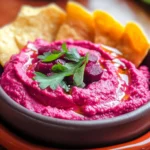
- Transfer the beet hummus to a serving bowl.
- Drizzle with a little extra virgin olive oil.
- Garnish with your choice of toppings, such as chopped fresh parsley, toasted sesame seeds, paprika, sumac, or crumbled feta cheese (if not vegan).
- Serve immediately or chill in the refrigerator for later. Chilling allows the flavors to meld together even further.
Nutrition
- Serving Size: One Normal Portion
- Calories: 80-100
- Sugar: 1-2 grams
- Fat: 5-7 grams
- Saturated Fat: <1 gram
- Carbohydrates: 6-8 grams
- Fiber: 2-3 grams
- Protein: 2-3 grams
- Cholesterol: 0 mg