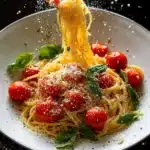
Ingredients
- Pasta: 1 pound (450g) dried pasta. The shape matters more than you might think! Long strands like spaghetti, linguine, or fettuccine work beautifully, allowing the light sauce to coat them evenly. However, shapes with nooks and crannies, such as fusilli, rotini, penne, or orecchiette, are also fantastic choices as they trap the delicious bits of tomato, garlic, and basil. Consider using a quality bronze-die cut pasta if available; its rougher texture helps the sauce cling better. Whole wheat pasta can also be used for added fiber and a nuttier flavor, though it might slightly alter the dish’s delicate taste profile.
- Fresh Tomatoes: 2 pints (about 4 cups or 600-700g) cherry or grape tomatoes. These are ideal due to their high juice content, thin skins, and inherent sweetness. Look for tomatoes that are firm yet yield slightly to pressure, deeply colored, and smell fragrant at the stem end. A mix of colors (red, yellow, orange) can make the dish visually stunning. If using larger tomatoes (like Roma or vine-ripened), you’ll need about 4-5 medium ones, seeded and diced into roughly ½-inch pieces. The key is fresh and ripe – underripe tomatoes will lack sweetness and flavour, while overripe ones can become mushy. During peak season, exploring heirloom varieties can add unique flavour nuances.
- Garlic: 3-4 large cloves, minced. Fresh garlic is non-negotiable here; its pungent aroma and sharp bite are crucial. Adjust the amount based on your preference and the size of the cloves. Mince them finely to ensure they distribute evenly throughout the sauce and release their flavor without overwhelming any single bite. Avoid pre-minced jarred garlic, as its flavor is often muted and can have a slightly acidic or off-taste.
- Extra Virgin Olive Oil: ½ cup (120ml), plus extra for drizzling. This is the backbone of the “sauce.” Choose a good quality, flavorful extra virgin olive oil, as its taste will prominently feature in the final dish. A fruity or peppery oil can add wonderful complexity. Don’t skimp here; it emulsifies with the tomato juices and pasta water to create a luscious coating.
- Fresh Basil: ½ packed cup fresh basil leaves, roughly chopped or torn. Like garlic, fresh basil is essential for that signature Italian summer flavor. Its sweet, slightly peppery, and minty notes are irreplaceable. Add it towards the end of the preparation to preserve its bright color and delicate aroma. Dried basil offers a different, more concentrated flavour profile and lacks the freshness required for this particular dish. If you absolutely must substitute, use about 1.5 tablespoons of dried basil, but the result will be significantly different.
- Parmesan Cheese: ½ cup (about 50g) freshly grated Parmesan cheese (Parmigiano-Reggiano recommended), plus more for serving. Use a block of good quality Parmesan and grate it yourself just before using. Pre-grated cheese often contains anti-caking agents that can affect its melting quality and flavour. The salty, nutty depth of real Parmigiano-Reggiano is incomparable and adds a crucial savoury element. Pecorino Romano can be substituted for a sharper, saltier kick.
- Salt: 1.5 – 2 teaspoons kosher salt or sea salt, divided (plus more for pasta water). Salt is vital for seasoning the pasta water adequately (it should taste like the sea!) and for drawing out the juices from the tomatoes and enhancing all the other flavors. Adjust the amount based on your taste and the saltiness of your cheese.
- Black Pepper: ½ teaspoon freshly ground black pepper, or to taste. Freshly ground pepper offers a more potent and complex flavour than pre-ground varieties.
- Red Pepper Flakes (Optional): ¼ – ½ teaspoon crushed red pepper flakes. For those who enjoy a gentle warmth or a spicy kick, a pinch of red pepper flakes added with the garlic can provide a lovely counterpoint to the sweet tomatoes and rich olive oil. Adjust the amount based on your heat preference.
Instructions
- Prepare the Tomato Mixture (The No-Cook Sauce): This is the heart of the dish, where the fresh flavours meld. In a large serving bowl (large enough to eventually hold the pasta too), combine the halved or quartered cherry/grape tomatoes (or diced larger tomatoes), the finely minced garlic, the ½ cup of extra virgin olive oil, about 1 teaspoon of kosher salt, the freshly ground black pepper, and the optional red pepper flakes (if using). Stir everything together gently but thoroughly, ensuring the tomatoes are well coated in the oil and seasonings. The salt will begin to draw moisture from the tomatoes, starting the process of creating the light sauce.
- Why a large bowl? You’ll eventually toss the hot pasta directly in this bowl, minimizing cleanup and allowing the pasta to immediately interact with the fresh ingredients.
- Timing: Ideally, let this mixture sit at room temperature for at least 15-30 minutes while you prepare and cook the pasta. This marinating time allows the flavours to meld and deepen significantly. If you’re short on time, even 10 minutes helps.
- Cook the Pasta: Bring a large pot of water to a rolling boil. Add a generous amount of salt – typically 1 to 2 tablespoons for 4-6 quarts of water. The water should taste distinctly salty, like seawater. This is crucial for flavouring the pasta from the inside out. Add the pasta (1 pound) to the boiling salted water and cook according to the package directions, stirring occasionally to prevent sticking. Aim for al dente – tender but still firm to the bite. Overcooked pasta will become mushy and won’t hold up well to the tossing.
- Why salt the water? Pasta absorbs water as it cooks, so this is your primary opportunity to season the pasta itself. Under-salted water leads to bland pasta, no matter how flavourful the sauce.
- Why al dente? The pasta will continue to cook slightly when tossed with the hot pasta water and the tomato mixture. Cooking it al dente ensures it retains a pleasant texture in the final dish.
- Reserve Pasta Water: Just before the pasta is ready to be drained, carefully scoop out about 1 cup (240ml) of the starchy cooking water using a heatproof mug or ladle. This cloudy, starchy liquid is culinary gold! It helps to emulsify the olive oil and tomato juices, creating a smoother, more cohesive sauce that clings beautifully to the pasta, rather than leaving a pool of oil at the bottom of the bowl. Set this reserved water aside.
- Drain the Pasta: Once the pasta reaches the perfect al dente texture, drain it quickly using a colander. Do not rinse the pasta. Rinsing removes the surface starch that is essential for helping the sauce adhere.
- Combine and Toss: Immediately transfer the hot, drained pasta directly into the large serving bowl containing the marinated tomato mixture. The heat from the pasta is key here – it will gently warm the tomatoes, soften the garlic slightly, and help release all the wonderful aromas.
- Add Enhancements & Emulsify: Add the chopped fresh basil and the ½ cup of freshly grated Parmesan cheese to the bowl with the pasta and tomatoes. Now, add about ¼ cup (60ml) of the reserved hot pasta water. Using tongs or two large spoons, toss everything together vigorously but carefully. The goal is to coat every strand of pasta with the tomato mixture, cheese, and herbs. The hot pasta water will help melt the cheese and combine with the olive oil and tomato juices to form a light, glossy sauce. If the pasta seems dry, add more reserved pasta water, one tablespoon at a time, until it reaches your desired consistency.
- Why add basil last? Adding fresh basil to the hot pasta at the end preserves its vibrant green color and fresh, delicate flavour. Prolonged heat would cause it to wilt excessively and lose its aromatic punch.
- The Tossing Technique: Be thorough but avoid crushing the tomatoes completely. You want some to break down slightly to contribute to the sauce, while others remain mostly intact for bursts of juicy flavour.
- Taste and Adjust Seasoning: Once everything is well combined, take a taste. Adjust the seasoning as needed. You might need a bit more salt (especially depending on the saltiness of your Parmesan), more black pepper, or even another pinch of red pepper flakes if you like it spicier.
- Serve Immediately: This dish is best served immediately while the pasta is hot and the tomatoes are perfectly warmed through but still fresh-tasting. Divide the Fresh Tomato Pasta Toss among warmed serving bowls or plates. Garnish generously with additional freshly grated Parmesan cheese, perhaps a few small fresh basil leaves, and an optional drizzle of good quality extra virgin olive oil.
Nutrition
- Serving Size: One Normal Portion
- Calories: 450-550 kcal