Ingredients
Scale
- 6 Large Eggs: The foundation of our deviled eggs, large eggs are the standard size used in most recipes and provide the perfect amount of egg white to hold a generous filling. When selecting eggs, opt for fresh, high-quality eggs. While brown or white eggs will both work, consider using eggs from pasture-raised chickens if you can find them, as they often have richer yolks and a more vibrant color, which will enhance the visual appeal of your deviled eggs. Make sure your eggs are cold when you start boiling them; this helps to prevent cracking.
- 3 Tablespoons Mayonnaise: Mayonnaise is the key to the creamy and rich texture of deviled egg filling. It binds the yolks together and adds a lusciousness that is essential to the classic deviled egg experience. For the best flavor, choose a good quality mayonnaise. Full-fat mayonnaise will provide the richest flavor and creamiest texture, but you can use light mayonnaise if you prefer to reduce the fat content. However, be aware that light mayonnaise might alter the texture slightly, making it a bit less rich. Consider experimenting with different types of mayonnaise for subtle flavor variations. For instance, avocado oil mayonnaise can add a slightly healthier twist, while olive oil mayonnaise can offer a different flavor profile. Avoid using salad dressing (like Miracle Whip) as a substitute for mayonnaise, as it has a sweeter and tangier flavor that will drastically change the taste of your deviled eggs and is not traditionally used in this recipe.
- 1 Teaspoon Dijon Mustard: Dijon mustard is a crucial ingredient for adding a tangy kick and depth of flavor to the deviled egg filling. Its sharp, slightly spicy flavor cuts through the richness of the mayonnaise and egg yolks, creating a balanced and complex taste. Dijon mustard is preferred over yellow mustard because it has a more sophisticated and less vinegary flavor. Using a good quality Dijon mustard will make a noticeable difference. If you don’t have Dijon mustard on hand, you can substitute it with a teaspoon of whole grain mustard for a slightly different texture and flavor, or a half teaspoon of yellow mustard in a pinch, but the flavor profile will be less refined.
- 1 Teaspoon White Vinegar: White vinegar adds another layer of tanginess and acidity to the filling, complementing the Dijon mustard and brightening the overall flavor profile. It also helps to thin out the yolk mixture slightly, creating a smoother, more spoonable consistency. White vinegar is ideal because its clean, sharp flavor doesn’t overpower the other ingredients. You can also use apple cider vinegar for a slightly milder, fruitier tang, or lemon juice for a brighter, citrusy note. Start with 1 teaspoon and adjust to taste, depending on your preference for tanginess.
- Salt and Pepper to Taste: Salt and pepper are essential seasonings that enhance all the other flavors in the deviled eggs. Salt brings out the natural flavors of the eggs, mayonnaise, and herbs, while pepper adds a subtle warmth and spice. Use fine sea salt or kosher salt for the best flavor. Freshly ground black pepper is always preferred for its more aromatic and robust flavor compared to pre-ground pepper. Season generously to taste, starting with a pinch of salt and pepper and adding more as needed until the filling is perfectly seasoned. Remember to taste the filling after adding all the ingredients and adjust the seasoning accordingly.
- 2 Tablespoons Fresh Dill, Chopped: Fresh dill is one of the key herbs that infuses these deviled eggs with their signature flavor. Dill has a bright, slightly grassy, and slightly anise-like flavor that pairs beautifully with eggs and mayonnaise. Fresh dill is essential for this recipe; dried dill will not provide the same vibrant flavor and fresh aroma. When chopping dill, make sure to chop it finely so it disperses evenly throughout the filling. If you love dill, feel free to add a bit more than 2 tablespoons for an even more pronounced dill flavor.
- 2 Tablespoons Fresh Chives, Chopped: Fresh chives add a delicate oniony flavor and a subtle sharpness to the deviled eggs. Their mild, grassy taste complements the dill and parsley perfectly, creating a harmonious blend of herbaceous flavors. Like dill, fresh chives are crucial for this recipe. Chives are easy to chop finely and their slender shape makes them visually appealing in the filling. If you don’t have chives, you can substitute them with finely chopped scallion greens for a similar, though slightly stronger, oniony flavor.
- 1 Tablespoon Fresh Parsley, Chopped: Fresh parsley adds a fresh, clean, and slightly peppery note to the deviled eggs. It provides a counterpoint to the richer flavors of mayonnaise and egg yolks and contributes to the overall herbaceousness of the dish. Flat-leaf parsley (Italian parsley) is preferred over curly parsley for its more robust flavor and smoother texture. Make sure to chop the parsley finely so it blends seamlessly into the filling. Parsley also adds a touch of green color to the filling, enhancing its visual appeal.
- Paprika for Garnish: Paprika is used as a classic garnish for deviled eggs, adding a touch of color and a very subtle hint of smoky sweetness. While it’s primarily for visual appeal, a good quality paprika can also contribute a mild flavor. Sweet paprika is the most common type used for garnish, but you can also use smoked paprika for a slightly smokier flavor or hot paprika for a touch of heat if you prefer. A light sprinkle of paprika is all you need to add a pop of color to the finished deviled eggs. You can use a fine mesh sieve to sprinkle the paprika evenly for a more professional look.
Instructions
Step 1: Boil the Eggs
- Choose the Right Pot: Select a pot that is large enough to hold all six eggs in a single layer without overcrowding. Overcrowding can lead to uneven cooking and increased risk of cracking.
- Place Eggs in the Pot: Gently place the eggs in the pot. Arrange them in a single layer to ensure even cooking.
- Cover with Cold Water: Cover the eggs completely with cold tap water. The water should be about an inch above the eggs. Starting with cold water helps the eggs heat up gradually, reducing the likelihood of cracking due to sudden temperature changes.
- Bring to a Boil: Place the pot on the stovetop over high heat and bring the water to a rolling boil. A rolling boil is characterized by large, vigorous bubbles that cannot be stirred down.
- Cover and Remove from Heat: Once the water reaches a rolling boil, immediately turn off the heat and remove the pot from the burner. Cover the pot tightly with a lid.
- Let Sit for 12 Minutes: Allow the eggs to sit in the hot water, covered, for precisely 12 minutes. This timing is crucial for achieving perfectly hard-boiled yolks that are cooked through but still creamy and not dry or chalky. Using a timer is highly recommended for accuracy.
- Prepare Ice Water Bath: While the eggs are sitting, prepare an ice water bath. Fill a large bowl with cold water and several ice cubes. This ice bath is essential for quickly stopping the cooking process and making the eggs easier to peel.
- Transfer to Ice Water: After 12 minutes, carefully transfer the eggs from the hot water to the ice water bath using a slotted spoon or tongs. Submerge the eggs completely in the ice water.
- Cool Completely: Let the eggs cool in the ice water for at least 15-20 minutes, or until they are completely cold to the touch. Cooling them thoroughly makes them much easier to peel. You can even leave them in the ice water for longer if needed.
Step 2: Prepare the Filling
- Peel the Eggs: Once the eggs are completely cooled, it’s time to peel them. Gently tap each egg all over on a hard surface (like the countertop) to create cracks in the shell. Start peeling under cold running water. The water helps to get under the shell and separate it from the egg white. Peel carefully, starting from the larger end of the egg where there is often an air pocket. If the shell is sticking, continue peeling under running water. Perfectly peeled eggs will have smooth, intact egg whites.
- Cut Eggs in Half: After peeling all the eggs, pat them dry with a paper towel. Cut each egg lengthwise in half using a sharp knife. Cutting lengthwise creates a larger surface area for the filling and is the traditional way to prepare deviled eggs.
- Remove Yolks: Carefully scoop out the egg yolks from each egg white half using a small spoon. Place the yolks in a medium-sized mixing bowl. Arrange the egg white halves on a serving platter or a plate.
- Mash Yolks: Using a fork, mash the egg yolks in the bowl until they are crumbly and broken down. This makes it easier to incorporate the other ingredients and create a smooth filling.
- Add Mayonnaise, Dijon Mustard, Vinegar, Salt, and Pepper: Add the mayonnaise, Dijon mustard, white vinegar, salt, and pepper to the mashed yolks in the bowl.
- Mix Until Creamy: Using the fork or a rubber spatula, mix all the ingredients together until they are thoroughly combined and the mixture is smooth and creamy. Taste the filling at this stage and adjust the seasoning if needed. You may want to add a little more salt, pepper, mustard, or vinegar to taste. The consistency should be thick but easily spoonable or pipeable.
Step 3: Add Herbs
- Chop Fresh Herbs: If you haven’t already, finely chop the fresh dill, chives, and parsley. Ensure the herbs are chopped into small pieces so they distribute evenly throughout the filling.
- Stir in Herbs: Add the chopped dill, chives, and parsley to the creamy yolk mixture in the bowl.
- Combine Thoroughly: Gently stir the herbs into the yolk mixture until they are evenly distributed throughout. The herbs will add a vibrant green color and fresh aroma to the filling.
Step 4: Fill the Egg Whites
- Choose Filling Method: You can fill the egg whites using either a spoon or a piping bag. Spooning is simpler and faster, while piping creates a more decorative and professional look.
- Spoon Filling: If spooning, simply use a small spoon to scoop a generous amount of the yolk mixture and fill each egg white half. Mound the filling slightly for a more appealing presentation.
- Piping Filling (Optional): For piping, transfer the yolk mixture to a piping bag fitted with a decorative tip (such as a star tip). Pipe the filling into each egg white half in a swirl or rosette pattern. Piping adds a touch of elegance and is ideal for special occasions.
Step 5: Garnish
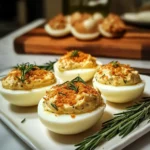
- Sprinkle with Paprika: Once all the egg whites are filled, lightly sprinkle paprika over the top of each deviled egg. Use a fine mesh sieve for even distribution. Paprika adds a pop of color and a subtle hint of flavor.
- Optional Garnishes: For extra visual appeal and flavor, you can add other garnishes in addition to or instead of paprika. Consider:
- Extra Fresh Herbs: A tiny sprig of fresh dill, chive, or parsley placed on top of each deviled egg adds a fresh, vibrant touch and reinforces the herb flavors.
- Finely Chopped Chives or Parsley: Sprinkle finely chopped chives or parsley over the eggs for a simple, elegant garnish.
- Pickled Vegetables: Tiny pieces of pickled capers, cornichons, or sweet pickles can add a briny or sweet contrast to the creamy filling.
- Smoked Paprika: Use smoked paprika for a deeper, smokier flavor and a richer color.
- Everything Bagel Seasoning: A sprinkle of everything bagel seasoning adds texture and a savory, garlicky, and seedy flavor.
Step 6: Serve and Enjoy!
- Chill (Optional): While herb-infused deviled eggs can be served immediately, chilling them in the refrigerator for about 30 minutes to an hour can help the flavors meld together and make them even more refreshing.
- Arrange on Platter: Arrange the finished herb-infused deviled eggs attractively on a serving platter. You can line the platter with lettuce leaves or fresh herbs for a decorative base.
- Serve Cold: Deviled eggs are best served cold. Keep them refrigerated until just before serving.
- Enjoy! Serve your beautiful and flavorful Herb-Infused Deviled Eggs as an appetizer or side dish and watch them disappear!
Nutrition
- Serving Size: One Normal Portion
- Calories: 150-180
- Sodium: 100-150 mg
- Fat: 12-15 grams
- Saturated Fat: 3-4 grams
- Carbohydrates: 1-2 grams
- Fiber: Less than 1 gram
- Protein: 7-8 grams
- Cholesterol: 200-250 mg