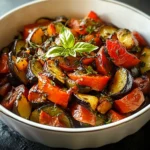
Ingredients
Scale
- 4 tbsp Olive Oil (divided): Olive oil is the foundation of Mediterranean cooking and absolutely crucial for ratatouille. We use it in two stages. Firstly, to sauté the aromatic base of onion, garlic, and carrot, building a flavorful foundation for the sauce. Secondly, the remaining olive oil is brushed over the layered vegetables before baking, ensuring they become beautifully tender and slightly caramelized, adding depth and richness to the dish. Opt for a good quality extra virgin olive oil for the best flavor and health benefits.
- 4 Garlic Cloves (minced): Garlic is a powerhouse of flavor, adding a pungent and savory note that is quintessential to ratatouille. Minced garlic infuses the olive oil as it cooks, creating a fragrant base for the tomato sauce. Don’t be shy with the garlic; its robust flavor mellows beautifully as it cooks, contributing a subtle sweetness and complexity to the overall dish. Freshly minced garlic is always preferred for its superior aroma and taste compared to pre-minced options.
- 1/2 Small Onion (chopped): Onion forms the aromatic backbone of the ratatouille sauce. When sautéed in olive oil, it becomes sweet and translucent, adding a foundational savory layer to the dish. Yellow or white onions are both suitable for this recipe. Chopping the onion into small pieces ensures it cooks evenly and blends seamlessly into the sauce, creating a smooth and flavorful base.
- 1/3 cup Carrot (shredded): Shredded carrot might seem like an unexpected addition to ratatouille, but it plays a crucial role in adding subtle sweetness and depth of flavor to the tomato sauce. It also contributes a touch of natural thickening to the sauce as it cooks down. Finely shredded carrot melts into the sauce, becoming almost undetectable in texture but contributing significantly to the overall richness and complexity of the flavor profile.
- 14 oz Crushed Tomatoes: Crushed tomatoes form the heart of the ratatouille sauce, providing the tangy, juicy base that complements the sweetness of the vegetables. A good quality can of crushed tomatoes is essential. Look for brands that use ripe, vine-ripened tomatoes for the best flavor. The crushed texture creates a rustic and slightly chunky sauce, perfectly complementing the sliced vegetables. You can also use diced tomatoes if you prefer a chunkier sauce, but crushed tomatoes generally yield a smoother and more integrated result.
- 2 tsp Dried Basil: Basil is a classic Mediterranean herb that perfectly complements the flavors of tomatoes, eggplant, and zucchini. Dried basil adds a warm, slightly peppery, and aromatic note to the ratatouille sauce. Dried herbs are convenient and readily available, and basil’s flavor holds up well in dried form. If you prefer fresh basil, you can use about 2 tablespoons of chopped fresh basil, adding it towards the end of the sauce simmering time to preserve its fresh flavor.
- 1/2 tsp Dried Parsley: Parsley adds a fresh, herbaceous, and slightly grassy note to the ratatouille, balancing the richness of the tomatoes and basil. Dried parsley provides a subtle but important layer of flavor complexity. Similar to basil, dried parsley is a convenient and readily available option. If you opt for fresh parsley, use about 1 tablespoon of chopped fresh parsley, adding it towards the end of the sauce simmering time for the best flavor and vibrant green color.
- 1 Small Eggplant (sliced 1/8 inch thick circles): Eggplant is a quintessential ratatouille vegetable, contributing a creamy, melt-in-your-mouth texture and a slightly earthy flavor. Small eggplants are ideal as they are less likely to be bitter. Slicing the eggplant into 1/8-inch thick circles ensures even cooking and allows it to become tender and caramelized in the oven. Look for firm, smooth eggplants with a deep purple color.
- 2 Small Zucchini (sliced 1/8 inch thick circles): Zucchini adds a delicate sweetness and a slightly firm-tender texture to the ratatouille. Small zucchini are preferred for their sweeter flavor and fewer seeds. Slicing them into 1/8-inch thick circles ensures they cook evenly and retain some texture while becoming tender in the oven. Choose firm, bright green zucchini without blemishes.
- 3 Roma Tomatoes (sliced 1/8 inch thick circles): Roma tomatoes, also known as plum tomatoes, are ideal for ratatouille due to their meaty texture and lower water content compared to other tomato varieties. This prevents the ratatouille from becoming too watery. Slicing them into 1/8-inch thick circles ensures they cook through evenly and maintain their shape while baking. Select firm, ripe Roma tomatoes with a vibrant red color.
- Salt (to taste): Salt is the essential seasoning that enhances all the flavors in the ratatouille. It balances the sweetness of the vegetables and brings out the savory notes of the herbs and garlic. Season generously throughout the cooking process, tasting and adjusting as needed. Kosher salt or sea salt are excellent choices for their clean, pure flavor.
- Black Pepper (to taste): Black pepper adds a subtle warmth and a touch of spice to the ratatouille, complementing the other flavors and adding depth. Freshly ground black pepper is always preferred for its more pungent and aromatic flavor compared to pre-ground pepper. Season to taste, adjusting the amount to your preference.
Instructions
- Preheat the Oven to 375°F (190°C): Begin by preheating your oven to 375°F (190°C). This ensures the oven is at the correct temperature when you place the ratatouille inside, promoting even cooking and optimal vegetable tenderness. Preheating is a crucial step for consistent baking results.
- Sauté the Aromatics: In a large 10-inch non-stick sauté pan, heat 2 tablespoons of olive oil over medium-high heat. Allow the oil to heat up until it shimmers slightly, indicating it’s ready for cooking. Add the chopped onion and minced garlic to the hot oil. Sauté, stirring frequently, until the onion becomes translucent and softened, about 3-5 minutes. This process releases the aromatic compounds in the onion and garlic, creating a flavorful base for the sauce. Be careful not to burn the garlic; reduce the heat if necessary.
- Add Carrot and Continue Sautéing: Add the shredded carrot to the pan with the softened onion and garlic. Continue to sauté, stirring occasionally, for another 3-5 minutes, until the carrot begins to soften slightly. Sautéing the carrot helps to mellow its raw flavor and release its natural sweetness, further enriching the sauce base.
- Simmer the Tomato Sauce: Pour the 14 oz can of crushed tomatoes into the pan with the sautéed vegetables. Add the dried basil and dried parsley. Stir well to combine all the ingredients, ensuring the herbs are evenly distributed throughout the tomato sauce. Bring the sauce to a gentle simmer.
- Thicken and Season the Sauce: Reduce the heat to low and simmer the tomato sauce uncovered for 15 minutes, or until it has slightly thickened. Simmering allows the flavors to meld together beautifully and the sauce to reduce slightly, concentrating its taste. Stir occasionally to prevent sticking. After 15 minutes, taste the sauce and adjust the seasoning with salt and black pepper to your liking. Seasoning is crucial at this stage to ensure the sauce is flavorful and balanced. Start with a pinch of salt and pepper, taste, and add more gradually until you achieve the desired flavor profile.
- Prepare the Baking Dish: Pour the thickened tomato sauce into a 2-quart baking dish. Spread the sauce evenly across the bottom of the dish, creating a bed for the layered vegetables. The sauce acts as a moisture barrier and flavor base for the ratatouille.
- Layer the Vegetables: Now comes the artistic part! Arrange the sliced eggplant, zucchini, and Roma tomatoes in a circular pattern, standing upright in the baking dish over the tomato sauce. Alternate the vegetables as you layer, creating a visually appealing and colorful pattern. Start from the outer edge of the dish and work your way inwards. The tight layering not only looks beautiful but also helps the vegetables cook evenly and retain their shape.
- Brush with Olive Oil: Brush the remaining 2 tablespoons of olive oil evenly over the top of the layered vegetables. This helps the vegetables to roast and caramelize in the oven, enhancing their flavor and preventing them from drying out. Ensure all the exposed surfaces of the vegetables are lightly coated with olive oil.
- Cover and Bake: Cover the baking dish tightly with aluminum foil. This creates a steamy environment in the oven, helping the vegetables to cook through and become tender. Bake in the preheated oven at 375°F (190°C) for 30 minutes.
- Uncover and Continue Baking: After 30 minutes, carefully remove the aluminum foil from the baking dish. Return the uncovered ratatouille to the oven and continue to bake for another 40 minutes, or until the vegetables are tender and slightly caramelized around the edges. Baking uncovered allows the excess moisture to evaporate, concentrating the flavors and creating a slightly roasted texture on the vegetables. Check for tenderness by piercing the vegetables with a fork; they should be easily pierced without resistance.
- Serve Immediately: Once the ratatouille is cooked through and tender, remove it from the oven and let it rest for a few minutes before serving. Serve immediately while it’s warm and the vegetables are at their peak tenderness and flavor. Garnish with fresh herbs like basil or parsley, if desired, for an extra touch of freshness and visual appeal.
Nutrition
- Serving Size: One Normal Portion
- Calories: 140