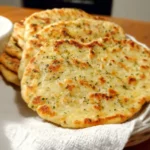
Ingredients
- All-Purpose Flour: 2 ½ cups (approximately 300g), plus extra for dusting
- Why All-Purpose? It has a moderate protein content, which gives the flatbreads a good balance of structure and tenderness. You can experiment with bread flour for a chewier texture or a mix of all-purpose and whole wheat for a nuttier flavor and added fiber.
- Plain Yogurt: 1 cup (approximately 245g), full-fat or Greek yogurt recommended
- The Star Ingredient: Yogurt adds moisture, fat, and acidity. The acidity reacts with the baking powder to create a lighter, fluffier texture, while the fat contributes to tenderness and flavor. Full-fat or Greek yogurt yields the richest results. If using Greek yogurt, which is thicker, you might need a tiny bit more or a splash of water to get the dough consistency right.
- Baking Powder: 2 teaspoons
- The Leavening Agent: Since this is a no-yeast recipe, baking powder is crucial for giving the flatbreads their lift and airy pockets as they cook. Ensure your baking powder is fresh for optimal results.
- Salt: 1 teaspoon
- Flavor Enhancer: Salt doesn’t just make the flatbreads salty; it enhances all the other flavors and also helps to control the leavening action.
- Sugar (Optional): 1 teaspoon
- Balancing Act: A small amount of sugar can balance the tanginess of the yogurt and aid in browning, though it’s not strictly necessary.
- Olive Oil or Melted Butter: 2 tablespoons, plus extra for brushing (optional)
- For Richness and Pliability: Adding a little fat to the dough itself contributes to a softer, more pliable flatbread. Brushing with oil or melted butter after cooking adds flavor and helps keep them soft.
- Warm Water (Optional): 1-2 tablespoons, if needed
- Consistency Adjustment: Depending on the thickness of your yogurt and the humidity, you might need a touch of warm water to bring the dough together.
Instructions
- Combine Dry Ingredients:
- In a large mixing bowl, whisk together the 2 ½ cups of all-purpose flour, 2 teaspoons of baking powder, 1 teaspoon of salt, and (if using) 1 teaspoon of sugar. Whisking helps to evenly distribute the baking powder and salt, ensuring consistent leavening and flavor.
- Add Wet Ingredients:
- Create a well in the center of the dry ingredients. Add the 1 cup of plain yogurt and 2 tablespoons of olive oil (or melted butter).
- Using a fork or your hands, gradually incorporate the flour into the wet ingredients until a shaggy dough begins to form.
- Knead the Dough:
- Turn the dough out onto a lightly floured surface.
- Knead for 3-5 minutes, just until the dough comes together and becomes smooth and slightly elastic. Be careful not to over-knead; we’re not developing gluten as extensively as in a yeasted bread. The dough should be soft and slightly tacky, but not overly sticky. If it’s too sticky, add a tablespoon of flour at a time. If it seems too dry and isn’t coming together, add warm water, one teaspoon at a time.
- Why Knead (Even a Little)? Even minimal kneading helps to hydrate the flour properly and develop just enough gluten structure for the flatbreads to hold their shape and have a pleasant chew.
- Rest the Dough (Crucial Step!):
- Form the dough into a ball and place it back in the mixing bowl. Cover the bowl with a clean kitchen towel or plastic wrap.
- Let the dough rest at room temperature for at least 20-30 minutes. This resting period allows the gluten to relax, making the dough much easier to roll out. It also allows the flour to fully hydrate and the baking powder to start its work. For even better flavor and texture, you can let it rest for up to an hour.
- Divide and Shape the Dough:
- After resting, gently punch down the dough and transfer it back to your lightly floured surface.
- Divide the dough into 8 equal pieces. You can eyeball this or use a kitchen scale for more uniform flatbreads (each piece will be around 65-70g).
- Roll each piece into a smooth ball. Cover the balls with the kitchen towel while you work to prevent them from drying out.
- Roll Out the Flatbreads:
- Take one dough ball and, on a lightly floured surface, use a rolling pin to roll it out into a thin circle or oval, about 6-8 inches in diameter and roughly ⅛ inch thick. Don’t worry about perfect shapes; rustic is part of their charm!
- If the dough springs back too much while rolling, let it rest for another 5 minutes before trying again.
- As you roll out each flatbread, you can stack them with a small piece of parchment paper in between to prevent sticking, or just keep them separate on a floured surface.
- Cook the Flatbreads:
- Heat a heavy-bottomed skillet (cast iron is excellent for this) or a griddle over medium-high heat. You want the pan to be hot enough to cook the flatbreads quickly and create those lovely charred spots, but not so hot that they burn before cooking through.
- You can cook the flatbreads in a dry pan or lightly brush the pan with a tiny bit of oil or ghee.
- Carefully place one rolled-out flatbread onto the hot skillet.
- Cook for 1-2 minutes per side. You’ll see bubbles start to form on the surface. Once the underside has golden-brown spots and some charring, flip it and cook the other side for another 1-2 minutes until it’s also nicely browned and cooked through. Some flatbreads might puff up dramatically, which is a great sign!
- Pan Temperature Tip: If the flatbreads are browning too quickly, reduce the heat slightly. If they are taking too long to get color and aren’t puffing, increase the heat a bit.
- Keep Warm and Serve:
- As each flatbread is cooked, transfer it to a plate and cover it with a clean kitchen towel. This helps to trap the steam and keeps the flatbreads soft and pliable.
- If desired, you can brush the warm flatbreads with a little melted butter, garlic butter, or olive oil, and sprinkle with fresh herbs like parsley or cilantro.
- Serve warm and enjoy!
Nutrition
- Serving Size: One Normal Portion
- Calories: 180-220
- Sugar: 2-3g
- Sodium: 300-350mg
- Fat: 4-6g
- Saturated Fat: 1-2g
- Carbohydrates: 28-32g
- Fiber: 1-2g
- Protein: 5-7g