Ingredients
Scale
- ¼ cup Kikkoman® Soy Sauce (Non-GMO): The cornerstone of our savory glaze, Kikkoman® Soy Sauce is more than just saltiness. It’s a fermented wonder, brimming with umami, that fifth taste sensation described as savory and deeply satisfying. Using Kikkoman® Soy Sauce, particularly the Non-GMO variety, ensures a high-quality, authentic flavor that is crucial for the depth of this recipe. Soy sauce not only provides saltiness but also adds a complex, rich flavor that enhances the natural sweetness of the maple syrup and the earthiness of the vegetables. It acts as a flavor enhancer, bringing out the best in all the other ingredients. Choosing a Non-GMO soy sauce aligns with a health-conscious approach, ensuring you’re using a product made with carefully selected ingredients and processes.
- 3 tablespoons Maple Syrup: Nature’s liquid gold, maple syrup brings a distinctive sweetness and a subtle caramel-like depth that is unparalleled. Unlike refined sugars, pure maple syrup contains antioxidants and minerals, adding a touch of nutritional value alongside its delightful flavor. It’s not just about sweetness; maple syrup lends a unique nuanced flavor profile that complements the soy sauce beautifully, creating that signature sweet and savory balance that makes this dish so irresistible. The sticky nature of maple syrup also contributes to the glaze, helping the sauce cling to the vegetables and caramelize during roasting, creating those delicious, slightly crispy edges.
- 2 tablespoon Olive Oil: A kitchen staple, olive oil is essential for roasting vegetables. It not only prevents the vegetables from drying out and sticking to the baking sheet but also helps them to brown beautifully and develop a slightly crispy exterior. Olive oil is also a healthy fat, rich in monounsaturated fatty acids and antioxidants, contributing to the overall nutritional benefits of the dish. Its mild flavor allows the other ingredients to shine, while its presence is crucial for achieving the perfect roasted texture. Choose a good quality extra virgin olive oil for the best flavor and health benefits.
- 1 teaspoon Fresh Thyme Leaves, finely chopped: Fresh thyme brings an herbaceous and slightly earthy note that elevates the entire dish. Its fragrant aroma and delicate flavor add a layer of complexity that cuts through the richness of the maple and soy. Finely chopping the thyme ensures that its flavor is evenly distributed throughout the dressing and released during cooking. Fresh herbs, like thyme, are packed with flavor and also offer antioxidants and vitamins. The aromatic quality of thyme enhances the overall sensory experience of the dish, making it even more appealing.
- ½ teaspoon Garlic, minced: Garlic is a flavor powerhouse, adding a pungent and aromatic dimension to the dressing. Minced garlic infuses the sauce with its characteristic savory and slightly spicy notes, creating a depth of flavor that is essential for balancing the sweetness. Garlic also has numerous health benefits, including immune-boosting properties and antioxidants. Its presence in this recipe adds not only flavor but also a nutritional boost. Freshly minced garlic is always preferred for its vibrant flavor compared to pre-minced options.
- ¼ teaspoon Black Pepper: A simple yet crucial ingredient, black pepper adds a touch of spice and enhances the flavors of all the other components. It provides a subtle warmth and a slight bite that prevents the dish from being overly sweet. Freshly ground black pepper is always recommended for its superior flavor and aroma compared to pre-ground pepper. It plays a vital role in seasoning and balancing the overall flavor profile of the roasted vegetables.
- 1 medium Butternut Squash, peeled, deseeded and cubed: Butternut squash is the star vegetable of this dish, offering a sweet and nutty flavor and a creamy texture when roasted. It’s packed with vitamins, minerals, and fiber, making it a nutritious and delicious choice. Cubing the squash ensures even cooking and allows it to caramelize beautifully in the oven. Butternut squash provides a substantial and satisfying element to the dish, making it a more filling and wholesome side. Its vibrant orange color also adds visual appeal to the final presentation.
- 2 cups Brussels Sprouts, halved: Brussels sprouts, often misunderstood, are transformed into a delicious delight when roasted. Roasting brings out their natural sweetness and reduces any bitterness, resulting in tender interiors and crispy, slightly caramelized outer leaves. Halving the Brussels sprouts ensures they cook evenly and allows the glaze to penetrate them effectively. Brussels sprouts are also incredibly nutritious, packed with vitamins, fiber, and antioxidants. They add a slightly bitter and earthy counterpoint to the sweetness of the butternut squash and the glaze, creating a balanced flavor profile.
- 1 cup Unsalted Pecans, sliced: Pecans introduce a wonderful textural contrast and a rich, buttery flavor to the dish. Their slight crunch and nutty sweetness complement the tender vegetables and the savory-sweet glaze perfectly. Unsalted pecans allow you to control the overall saltiness of the dish, ensuring it’s balanced. Slicing the pecans helps them toast evenly in the oven and distribute throughout the vegetables. Pecans also provide healthy fats and antioxidants, adding to the nutritional value.
- ½ cup Dried Cherries: Dried cherries bring a burst of chewy sweetness and a slightly tart counterpoint to the savory and nutty flavors. Their vibrant red color also adds visual appeal to the dish. Dried cherries rehydrate slightly during roasting, becoming plump and juicy. They offer a concentrated sweetness and a unique flavor that complements the other ingredients beautifully. You can also use other dried fruits like cranberries or apricots for variation, but dried cherries offer a particularly delightful flavor profile in this recipe.
- ⅓ cup Unsalted Pumpkin Seeds: Pumpkin seeds, also known as pepitas, add another layer of texture and nutty flavor. They provide a satisfying crunch and a slightly earthy taste that complements the pecans and the vegetables. Unsalted pumpkin seeds ensure you control the salt level of the dish. They are also a good source of magnesium, zinc, and healthy fats, adding to the nutritional benefits. Scattering them over the vegetables during the final roasting stage allows them to toast lightly, enhancing their flavor and texture.
Instructions
- Preheat and Prepare: Begin by preheating your oven to 350ºF (175°C). This temperature is ideal for roasting vegetables, allowing them to cook through evenly and develop a beautiful caramelization without burning. While the oven is preheating, line a large baking sheet with parchment paper. Parchment paper is your best friend when roasting vegetables as it prevents sticking, ensures easy cleanup, and promotes even browning.
- Whisk the Flavorful Dressing: In a small mixing bowl, embark on creating the star of the show – the maple soy dressing. Whisk together ¼ cup Kikkoman® Soy Sauce, 3 tablespoons maple syrup, 2 tablespoons olive oil, 1 teaspoon finely chopped fresh thyme leaves, ½ teaspoon minced garlic, and ¼ teaspoon black pepper. Whisking ensures all the ingredients are well combined and emulsified, creating a homogenous and flavorful dressing. Set this bowl aside; this liquid gold will transform our vegetables into something extraordinary. The aroma at this stage already hints at the deliciousness to come!
- Coat the Vegetables: In a medium mixing bowl, combine the cubed butternut squash and halved Brussels sprouts. These are the hearty vegetables that form the base of our dish. Pour half of the prepared dressing over the vegetables. Using your hands or a spatula, gently stir and toss the vegetables to ensure they are evenly coated with the dressing. This initial coating allows the vegetables to absorb the flavorful marinade during the first stage of roasting, infusing them from the inside out.
- First Bake: Spread the dressed vegetables in a single layer onto the prepared baking sheet. Avoid overcrowding the baking sheet, as this can lead to steaming rather than roasting. If necessary, use two baking sheets to ensure proper spacing. Place the baking sheet in the preheated oven and bake for 30 minutes. This initial roasting period allows the vegetables to soften and begin to caramelize, developing their inherent sweetness and roasted flavors.
- Add the Finishing Touches: After 30 minutes, carefully remove the baking sheet from the oven. At this stage, the vegetables will be partially cooked and fragrant. Now, it’s time to add the textural and flavor enhancers. Scatter the sliced pecans, pumpkin seeds, and dried cherries evenly over the vegetables on the baking sheet. These additions will toast and become wonderfully fragrant during the final roasting stage.
- Second Bake and Glaze: Drizzle the remaining dressing evenly over all the ingredients on the baking sheet, ensuring the nuts, seeds, and dried cherries also get a touch of that flavorful glaze. Return the baking sheet to the oven for an additional 10 minutes. This final roasting time allows the nuts and seeds to toast to golden perfection, the dried cherries to plump up slightly, and the remaining dressing to caramelize further, creating a beautiful glaze that coats all the ingredients.
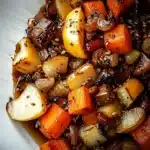
- Serve Hot and Enjoy: After the final 10 minutes, remove the baking sheet from the oven. The vegetables should be tender, slightly caramelized, and beautifully glazed, with toasted nuts and plump dried cherries scattered throughout. Serve immediately while hot. The aroma and visual appeal alone will be enough to entice everyone to the table. Enjoy the symphony of flavors and textures – the sweet and savory glaze, the tender vegetables, the crunchy nuts and seeds, and the chewy bursts of dried cherries. This Maple Soy Roasted Vegetables dish is a guaranteed crowd-pleaser!
Nutrition
- Serving Size: One Normal Portion
- Calories: 250-300 kcal
- Fat: 15-20 grams
- Carbohydrates: 25-35 grams
- Fiber: 5-7 grams
- Protein: 5-7 grams