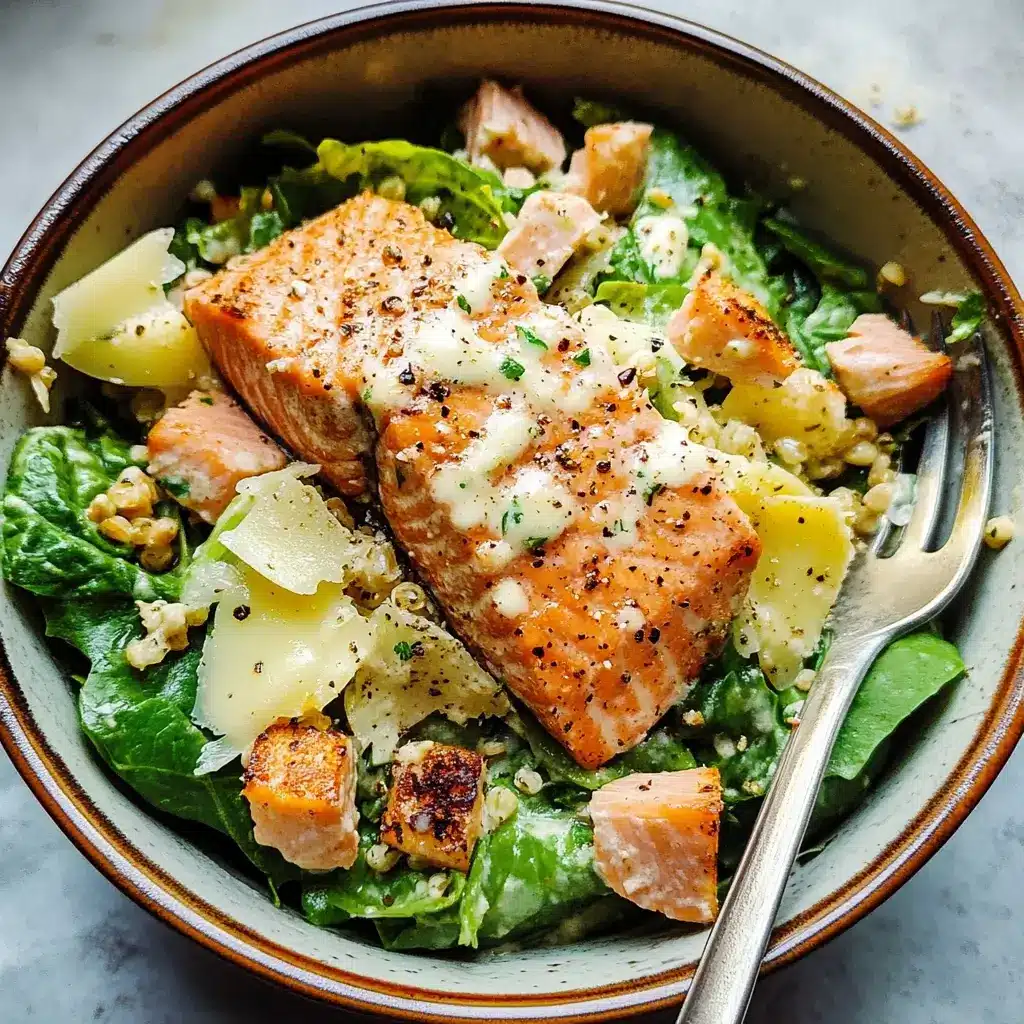
There are some meals that just click, hitting that perfect trifecta of nourishing, delicious, and deeply satisfying. This Salmon Caesar Salad Grain Bowl is unequivocally one of those meals for my household. The first time I put this together, I was aiming for something healthier than a traditional Caesar, but still packed with flavour. I wasn’t sure if the combination of hearty grains, flaky salmon, crisp romaine, and that creamy, tangy dressing would meld seamlessly, but oh, did it ever. My partner, usually a bit skeptical of “healthy bowls,” devoured it and immediately asked when we could have it again. Even the kids, initially drawn in by the familiar Caesar flavour, were won over by the textures and the satisfying nature of the grains. It’s become a staple – perfect for a vibrant weeknight dinner, an impressive yet easy lunch for guests, or even fantastic meal-prepped components ready to assemble. It feels indulgent, thanks to the rich salmon and classic Caesar notes, yet incredibly wholesome and energizing. It’s proof that healthy eating doesn’t mean sacrificing flavour or satisfaction; it’s about smart, delicious combinations like this one.
The Ultimate Salmon Caesar Salad Grain Bowl: Ingredients You’ll Need
Building this flavour-packed bowl requires assembling several key components. Each plays a crucial role in creating the final symphony of tastes and textures. Here’s a breakdown of what you’ll need, with specific amounts to guide you:
For the Perfectly Cooked Salmon:
- Salmon Fillets: 2 (around 6-7 ounces / 170-200g each), skin-on or skinless, depending on your preference. Opt for high-quality, sustainably sourced salmon like King, Sockeye, or Atlantic. The richness of the salmon is central to the dish.
- Olive Oil: 1 tablespoon. Extra virgin olive oil lends a subtle fruity note, but regular olive oil works too.
- Garlic Powder: ½ teaspoon. Adds a gentle, savoury aroma without the risk of burning fresh garlic.
- Onion Powder: ½ teaspoon. Complements the garlic powder for a rounded savoury base.
- Dried Dill: ½ teaspoon (optional, but recommended). Dill and salmon are a classic pairing, adding a fresh, herbaceous note.
- Salt: ½ teaspoon, or to taste. Use sea salt or kosher salt for better flavour.
- Black Pepper: ¼ teaspoon, freshly ground for the best flavour.
For the Hearty Grain Base:
- Quinoa: 1 cup, uncooked. Tricolor quinoa adds visual appeal, but white or red quinoa works perfectly. Quinoa offers a complete protein and a lovely fluffy texture. (Alternatively, use Farro, Brown Rice, or Barley – see tips section).
- Water or Vegetable Broth: 2 cups (or follow package instructions for your chosen grain). Using broth adds an extra layer of flavour.
- Salt: ¼ teaspoon (if using water). Omit if using salted broth.
For the Crisp Caesar Salad Element:
- Romaine Lettuce: 1 large head (about 10-12 ounces / 280-340g), washed, dried thoroughly, and chopped into bite-sized pieces. The crispness of Romaine is essential for a classic Caesar feel.
- Parmesan Cheese: ½ cup, freshly shaved or grated. Use a good quality Parmigiano-Reggiano for the best nutty, salty flavour. Reserve a little extra for garnish.
- Croutons: 1 cup. Use your favourite store-bought Caesar or garlic croutons, or make your own for superior texture and flavour (see tips!).
For the Creamy (Healthier) Homemade Caesar Dressing:
- Plain Greek Yogurt: ½ cup (full-fat or low-fat). This forms the creamy base, offering a healthier alternative to traditional raw egg yolks and excessive oil, while providing a pleasant tang and protein boost.
- Olive Oil: ¼ cup, extra virgin. Essential for richness and flavour emulsion.
- Lemon Juice: 2 tablespoons, freshly squeezed. Provides crucial acidity and brightness.
- Dijon Mustard: 1 tablespoon. Acts as an emulsifier and adds a sharp, tangy kick.
- Anchovy Paste: 1-2 teaspoons (or 2-3 minced anchovy fillets). This is key for the authentic umami depth of Caesar dressing. Adjust amount based on your preference for fishiness. Don’t skip it if you want true Caesar flavour!
- Garlic: 1 large clove, minced or pressed. Fresh garlic is essential here for pungent flavour.
- Worcestershire Sauce: 1 teaspoon. Adds another layer of savoury complexity and umami.
- Salt: ¼ teaspoon, or to taste (remember Parmesan and anchovy are salty).
- Black Pepper: ¼ teaspoon, freshly ground.
Optional Toppings & Garnishes:
- Cherry Tomatoes: ½ cup, halved. Adds a burst of sweetness, acidity, and colour.
- Avocado: ½ ripe avocado, sliced or diced. Brings extra creaminess and healthy fats.
- Fresh Parsley or Dill: Chopped, for garnish. Adds a touch of freshness and green.
- Lemon Wedges: For serving, allows individuals to add extra brightness.
- Red Pepper Flakes: A pinch for those who like a little heat.
Step-by-Step Instructions: Crafting Your Perfect Bowl
Follow these steps methodically for a perfectly balanced and delicious Salmon Caesar Salad Grain Bowl every time.
1. Cook the Grains:
* Rinse the quinoa thoroughly under cold running water using a fine-mesh sieve. This removes any bitterness from its natural coating (saponin).
* In a medium saucepan, combine the rinsed quinoa, water or vegetable broth, and salt (if using water).
* Bring the mixture to a boil over medium-high heat.
* Once boiling, reduce the heat to low, cover the saucepan tightly, and simmer for 15-20 minutes, or until all the liquid is absorbed and the quinoa is fluffy (you’ll see little “tails” sprout).
* Remove from heat and let it stand, covered, for 5 minutes.
* Fluff the quinoa gently with a fork. Set aside to cool slightly while you prepare the other components. If making ahead, spread it on a baking sheet to cool faster.
2. Prepare and Cook the Salmon:
* Pat the salmon fillets completely dry with paper towels. This is crucial for achieving a good sear (if pan-searing) or crispy skin.
* In a small bowl, combine the olive oil, garlic powder, onion powder, dried dill (if using), salt, and pepper.
* Brush this mixture evenly over all sides of the salmon fillets.
* Choose your cooking method:
* Pan-Searing (Recommended for flavour): Heat a large skillet (cast iron or non-stick) over medium-high heat. Add a tiny bit more oil if needed (about 1 tsp). Carefully place the salmon fillets in the hot skillet, skin-side down if using skin-on. Cook for 4-6 minutes, undisturbed, until the skin is crispy and golden brown, and the flesh is cooked about halfway up the side. Gently flip the fillets and cook for another 2-4 minutes on the other side, or until the salmon is cooked through but still moist. It should flake easily with a fork, and the internal temperature should reach 135-140°F (57-60°C) for medium. Avoid overcooking!
* Baking: Preheat your oven to 400°F (200°C). Place the seasoned salmon fillets on a baking sheet lined with parchment paper. Bake for 12-15 minutes, depending on the thickness of the fillets, or until cooked through.
* Air Frying: Preheat your air fryer to 380°F (190°C). Place the seasoned salmon fillets in the air fryer basket (skin-side down if applicable), ensuring they aren’t overcrowded. Air fry for 8-12 minutes, depending on thickness, until cooked through. No need to flip usually.
* Once cooked, transfer the salmon to a plate and let it rest for a few minutes. This allows the juices to redistribute, resulting in moister fish. You can then flake the salmon into large chunks using two forks, discarding the skin if desired (or leaving it on if crispy and you enjoy it).
3. Make the Homemade Caesar Dressing:
* While the salmon rests and grains cool, prepare the dressing.
* In a medium bowl or a jar with a tight-fitting lid, combine the Greek yogurt, olive oil, fresh lemon juice, Dijon mustard, anchovy paste, minced garlic, and Worcestershire sauce.
* Whisk vigorously (or shake the jar) until the dressing is smooth, creamy, and well emulsified.
* Taste the dressing and season with salt and freshly ground black pepper as needed. Remember that the Parmesan cheese added later will also contribute saltiness. Adjust lemon juice or anchovy paste if desired for more brightness or umami.
* Set aside. This dressing can be made ahead and stored in the refrigerator for up to 5 days.
4. Prepare the Salad Base:
* Ensure your chopped Romaine lettuce is thoroughly dried – excess water will dilute the dressing and make the salad soggy. A salad spinner is excellent for this.
* In a large salad bowl, combine the chopped Romaine lettuce, about half of the shaved/grated Parmesan cheese, and the croutons.
* Drizzle about half to two-thirds of the prepared Caesar dressing over the lettuce mixture.
* Gently toss the salad until the lettuce leaves are evenly coated with dressing. Don’t overdress initially; you can always add more later or serve extra on the side.
5. Assemble Your Salmon Caesar Salad Grain Bowls:
* Divide the cooked and slightly cooled quinoa evenly among your serving bowls (this recipe typically makes 2 large main course bowls or 4 smaller lunch-sized bowls). Create a bed of grains at the bottom.
* Top the quinoa generously with the dressed Caesar salad mixture (lettuce, Parmesan, croutons).
* Arrange the flaked cooked salmon over the salad greens.
* Drizzle any remaining Caesar dressing over the salmon and the rest of the bowl, if desired.
* Garnish generously with the remaining shaved/grated Parmesan cheese.
* Add any optional toppings you’re using: halved cherry tomatoes for colour and sweetness, sliced avocado for creaminess, a sprinkle of fresh parsley or dill for freshness.
* Serve immediately with lemon wedges on the side for squeezing over.
Nutrition Facts (Estimated)
- Servings: Makes 2 large main course servings or 4 smaller lunch-sized servings.
- Calories per Serving (approximate, based on 2 large servings): 750 – 900 kcal.
Disclaimer: Nutritional information is an estimate only and can vary significantly based on specific ingredient choices (e.g., type of salmon, fat content of yogurt, brand of croutons, portion sizes), and preparation methods. This estimate includes the grains, salmon, salad components, dressing, and standard garnishes like Parmesan. Adding avocado or extra oil will increase the calorie count. This bowl provides a substantial amount of protein, healthy omega-3 fatty acids from the salmon, fiber from the grains and lettuce, and calcium from the Parmesan and yogurt.
Preparation & Cooking Time
Understanding the time commitment helps plan your meal preparation effectively.
- Preparation Time: 20-25 minutes (includes chopping lettuce, making dressing, prepping salmon, measuring ingredients).
- Cooking Time: 20-25 minutes (includes cooking grains and cooking salmon simultaneously).
- Total Time: Approximately 40-50 minutes from start to finish.
Note: Time can be reduced significantly by using pre-cooked grains or meal-prepping components like the dressing and cooked grains ahead of time.
How to Serve Your Masterpiece
Presentation enhances the dining experience! Here are some ways to serve your Salmon Caesar Salad Grain Bowl:
- Temperature Considerations:
- Ideally, serve the bowl with the grains slightly warm or at room temperature, the salmon freshly cooked and warm, and the salad components crisp and cool. This contrast is delightful.
- However, it’s also delicious served fully chilled, especially if meal-prepped for lunch. Just ensure the salmon is cooked through properly beforehand.
- Plating Strategy:
- Use wide, relatively shallow bowls to showcase all the colourful components.
- Layer strategically: Start with the grain base, add the dressed greens, nestle the flaked salmon on top, and then sprinkle with Parmesan and other garnishes.
- Drizzle extra dressing artfully over the top just before serving.
- Occasions:
- Weeknight Winner: A satisfying and relatively quick meal after a busy day.
- Healthy Lunch: Perfect for a substantial midday meal, especially if components are prepped ahead.
- Elegant Brunch: A sophisticated and unexpected addition to a brunch spread.
- Light Dinner Party Fare: Impressive enough for guests but easy to assemble.
- Essential Garnishes:
- Always include extra shaved Parmesan on top.
- A lemon wedge on the side is non-negotiable for adding fresh acidity.
- A sprinkle of freshly ground black pepper enhances all the flavours.
- Chopped fresh parsley or dill adds visual appeal and freshness.
- Drink Pairings:
- Wine: A crisp, dry white wine like Sauvignon Blanc, Pinot Grigio, or even a dry Rosé complements the richness of the salmon and the tang of the dressing.
- Beer: A light Lager or a Belgian-style Witbier works well.
- Non-Alcoholic: Sparkling water with lemon or lime, unsweetened iced tea, or a light kombucha are refreshing choices.
Additional Tips for Success
Elevate your grain bowl game with these extra pointers:
- Meal Prep Magic: This recipe is fantastic for meal prepping. Cook the grains and salmon ahead of time and store them in separate airtight containers in the refrigerator (grains up to 4 days, salmon up to 2-3 days). Make the dressing and store it separately (up to 5 days). Wash and chop the romaine, but store it undressed with a paper towel to absorb moisture. Assemble bowls just before serving to keep the lettuce crisp and prevent sogginess.
- Dressing Variations & Shortcuts: While the homemade Greek yogurt dressing is healthier and delicious, you can certainly use your favourite high-quality bottled Caesar dressing in a pinch. For variations on homemade: add a pinch of cayenne for heat, blend in a small amount of soaked cashews (for vegan), or use sour cream instead of Greek yogurt for a richer tang. Always taste and adjust seasonings!
- Grain Game Exploration: Don’t feel limited to quinoa! This bowl is excellent with other hearty grains.
- Farro: Offers a delightful chewy texture and nutty flavour.
- Brown Rice: A classic whole grain, readily available and slightly chewy.
- Barley: Very chewy and satisfying, takes a bit longer to cook.
- Freekeh: Smoked young wheat with a unique flavour and chewy bite.
- Bulgur Wheat: Cooks quickly and has a tender texture (ensure it’s coarse bulgur).
Adjust cooking times and liquid ratios according to package directions for your chosen grain.
- Salmon Savvy Cooking: The key to great salmon is not overcooking it. Aim for moist and flaky. Besides pan-searing and baking, grilling adds a lovely smoky flavour. If using leftover cooked salmon, simply flake it cold or gently warm it before adding to the bowl. You can also use hot-smoked salmon flakes for a different flavour profile.
- Crunch Factor & Texture Boosts: Beyond classic croutons, add extra texture and nutritional value:
- Toasted Nuts: Slivered almonds, chopped walnuts, or pecans add richness and crunch.
- Seeds: Pumpkin seeds (pepitas) or sunflower seeds offer a nice bite.
- Crispy Chickpeas: Roast chickpeas with olive oil and spices until crispy for a protein-packed crunch.
- Homemade Croutons: Cube day-old sturdy bread (like sourdough), toss with olive oil, garlic powder, salt, and pepper, and bake at 375°F (190°C) until golden and crisp (about 10-15 minutes). Far superior to store-bought!
Frequently Asked Questions (FAQ)
Here are answers to some common questions about this Salmon Caesar Salad Grain Bowl:
- Q: Can I make this recipe ahead of time for lunches?
- A: Absolutely! As mentioned in the tips, this is ideal for meal prep. The best approach is to store the cooked grains, cooked salmon (flaked), Caesar dressing, and washed/chopped (but undressed) lettuce in separate airtight containers in the refrigerator. Assemble your bowl just before you plan to eat it, or up to a few hours ahead if necessary (though the lettuce will be crispest if dressed right before serving). Add croutons just before eating to prevent them from becoming soggy.
- Q: How long will the homemade Greek Yogurt Caesar dressing last?
- A: Stored in an airtight container (like a mason jar) in the refrigerator, the homemade Caesar dressing should stay fresh and delicious for about 3 to 5 days. The flavours might even meld and improve slightly after the first day. Give it a good whisk or shake before each use, as some separation is natural.
- Q: I don’t have quinoa. What other grains work well?
- A: Many grains substitute beautifully! As detailed in the tips section, consider using farro (chewy, nutty), brown rice (classic, accessible), barley (hearty, chewy), freekeh (smoky, chewy), or even quick-cooking options like bulgur wheat or couscous (though couscous offers less chew). Adjust the cooking liquid and time based on the grain you choose. The goal is a hearty, slightly chewy base that complements the other textures.
- Q: Can I substitute the salmon with a different protein?
- A: Yes, definitely! While salmon offers unique flavour and omega-3s, this bowl structure works well with other proteins. Try:
- Grilled Chicken Breast: Seasoned similarly or with classic Caesar spices.
- Sautéed Shrimp: Quick-cooking and delicious with garlic and lemon.
- Canned Tuna (high quality): Flaked and mixed in for a budget-friendly option.
- Chickpeas: For a vegetarian/vegan option, use roasted crispy chickpeas or simply drained canned chickpeas. Adjust the dressing accordingly (use a vegan Caesar recipe if needed).
- A: Yes, definitely! While salmon offers unique flavour and omega-3s, this bowl structure works well with other proteins. Try:
- Q: Is this recipe kid-friendly?
- A: It can be very kid-friendly! Many kids enjoy Caesar salad flavours. You can adapt it by:
- Deconstructing the Bowl: Serve the components separately – a pile of grains, some plain lettuce, pieces of salmon, croutons, and the dressing on the side for dipping.
- Milder Dressing: Reduce or omit the anchovy paste if the flavour is too strong for young palates (though it loses some classic character). Ensure the garlic isn’t too overpowering.
- Familiarity: Highlight the familiar elements like the “salad,” the “fish,” and the “crunchy bits” (croutons). The combination of familiar and new can encourage trying the full bowl.
- A: It can be very kid-friendly! Many kids enjoy Caesar salad flavours. You can adapt it by:
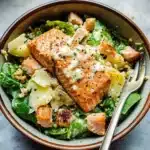
Salmon Caesar Salad Grain Bowl Recipe
Ingredients
For the Perfectly Cooked Salmon:
- Salmon Fillets: 2 (around 6-7 ounces / 170-200g each), skin-on or skinless, depending on your preference. Opt for high-quality, sustainably sourced salmon like King, Sockeye, or Atlantic. The richness of the salmon is central to the dish.
- Olive Oil: 1 tablespoon. Extra virgin olive oil lends a subtle fruity note, but regular olive oil works too.
- Garlic Powder: ½ teaspoon. Adds a gentle, savoury aroma without the risk of burning fresh garlic.
- Onion Powder: ½ teaspoon. Complements the garlic powder for a rounded savoury base.
- Dried Dill: ½ teaspoon (optional, but recommended). Dill and salmon are a classic pairing, adding a fresh, herbaceous note.
- Salt: ½ teaspoon, or to taste. Use sea salt or kosher salt for better flavour.
- Black Pepper: ¼ teaspoon, freshly ground for the best flavour.
For the Hearty Grain Base:
- Quinoa: 1 cup, uncooked. Tricolor quinoa adds visual appeal, but white or red quinoa works perfectly. Quinoa offers a complete protein and a lovely fluffy texture. (Alternatively, use Farro, Brown Rice, or Barley – see tips section).
- Water or Vegetable Broth: 2 cups (or follow package instructions for your chosen grain). Using broth adds an extra layer of flavour.
- Salt: ¼ teaspoon (if using water). Omit if using salted broth.
For the Crisp Caesar Salad Element:
- Romaine Lettuce: 1 large head (about 10-12 ounces / 280-340g), washed, dried thoroughly, and chopped into bite-sized pieces. The crispness of Romaine is essential for a classic Caesar feel.
- Parmesan Cheese: ½ cup, freshly shaved or grated. Use a good quality Parmigiano-Reggiano for the best nutty, salty flavour. Reserve a little extra for garnish.
- Croutons: 1 cup. Use your favourite store-bought Caesar or garlic croutons, or make your own for superior texture and flavour (see tips!).
For the Creamy (Healthier) Homemade Caesar Dressing:
- Plain Greek Yogurt: ½ cup (full-fat or low-fat). This forms the creamy base, offering a healthier alternative to traditional raw egg yolks and excessive oil, while providing a pleasant tang and protein boost.
- Olive Oil: ¼ cup, extra virgin. Essential for richness and flavour emulsion.
- Lemon Juice: 2 tablespoons, freshly squeezed. Provides crucial acidity and brightness.
- Dijon Mustard: 1 tablespoon. Acts as an emulsifier and adds a sharp, tangy kick.
- Anchovy Paste: 1-2 teaspoons (or 2-3 minced anchovy fillets). This is key for the authentic umami depth of Caesar dressing. Adjust amount based on your preference for fishiness. Don’t skip it if you want true Caesar flavour!
- Garlic: 1 large clove, minced or pressed. Fresh garlic is essential here for pungent flavour.
- Worcestershire Sauce: 1 teaspoon. Adds another layer of savoury complexity and umami.
- Salt: ¼ teaspoon, or to taste (remember Parmesan and anchovy are salty).
- Black Pepper: ¼ teaspoon, freshly ground.
Optional Toppings & Garnishes:
- Cherry Tomatoes: ½ cup, halved. Adds a burst of sweetness, acidity, and colour.
- Avocado: ½ ripe avocado, sliced or diced. Brings extra creaminess and healthy fats.
- Fresh Parsley or Dill: Chopped, for garnish. Adds a touch of freshness and green.
- Lemon Wedges: For serving, allows individuals to add extra brightness.
- Red Pepper Flakes: A pinch for those who like a little heat.
Instructions
1. Cook the Grains:
* Rinse the quinoa thoroughly under cold running water using a fine-mesh sieve. This removes any bitterness from its natural coating (saponin).
* In a medium saucepan, combine the rinsed quinoa, water or vegetable broth, and salt (if using water).
* Bring the mixture to a boil over medium-high heat.
* Once boiling, reduce the heat to low, cover the saucepan tightly, and simmer for 15-20 minutes, or until all the liquid is absorbed and the quinoa is fluffy (you’ll see little “tails” sprout).
* Remove from heat and let it stand, covered, for 5 minutes.
* Fluff the quinoa gently with a fork. Set aside to cool slightly while you prepare the other components. If making ahead, spread it on a baking sheet to cool faster.
2. Prepare and Cook the Salmon:
* Pat the salmon fillets completely dry with paper towels. This is crucial for achieving a good sear (if pan-searing) or crispy skin.
* In a small bowl, combine the olive oil, garlic powder, onion powder, dried dill (if using), salt, and pepper.
* Brush this mixture evenly over all sides of the salmon fillets.
* Choose your cooking method:
* Pan-Searing (Recommended for flavour): Heat a large skillet (cast iron or non-stick) over medium-high heat. Add a tiny bit more oil if needed (about 1 tsp). Carefully place the salmon fillets in the hot skillet, skin-side down if using skin-on. Cook for 4-6 minutes, undisturbed, until the skin is crispy and golden brown, and the flesh is cooked about halfway up the side. Gently flip the fillets and cook for another 2-4 minutes on the other side, or until the salmon is cooked through but still moist. It should flake easily with a fork, and the internal temperature should reach 135-140°F (57-60°C) for medium. Avoid overcooking!
* Baking: Preheat your oven to 400°F (200°C). Place the seasoned salmon fillets on a baking sheet lined with parchment paper. Bake for 12-15 minutes, depending on the thickness of the fillets, or until cooked through.
* Air Frying: Preheat your air fryer to 380°F (190°C). Place the seasoned salmon fillets in the air fryer basket (skin-side down if applicable), ensuring they aren’t overcrowded. Air fry for 8-12 minutes, depending on thickness, until cooked through. No need to flip usually.
* Once cooked, transfer the salmon to a plate and let it rest for a few minutes. This allows the juices to redistribute, resulting in moister fish. You can then flake the salmon into large chunks using two forks, discarding the skin if desired (or leaving it on if crispy and you enjoy it).
3. Make the Homemade Caesar Dressing:
* While the salmon rests and grains cool, prepare the dressing.
* In a medium bowl or a jar with a tight-fitting lid, combine the Greek yogurt, olive oil, fresh lemon juice, Dijon mustard, anchovy paste, minced garlic, and Worcestershire sauce.
* Whisk vigorously (or shake the jar) until the dressing is smooth, creamy, and well emulsified.
* Taste the dressing and season with salt and freshly ground black pepper as needed. Remember that the Parmesan cheese added later will also contribute saltiness. Adjust lemon juice or anchovy paste if desired for more brightness or umami.
* Set aside. This dressing can be made ahead and stored in the refrigerator for up to 5 days.
4. Prepare the Salad Base:
* Ensure your chopped Romaine lettuce is thoroughly dried – excess water will dilute the dressing and make the salad soggy. A salad spinner is excellent for this.
* In a large salad bowl, combine the chopped Romaine lettuce, about half of the shaved/grated Parmesan cheese, and the croutons.
* Drizzle about half to two-thirds of the prepared Caesar dressing over the lettuce mixture.
* Gently toss the salad until the lettuce leaves are evenly coated with dressing. Don’t overdress initially; you can always add more later or serve extra on the side.
5. Assemble Your Salmon Caesar Salad Grain Bowls:
* Divide the cooked and slightly cooled quinoa evenly among your serving bowls (this recipe typically makes 2 large main course bowls or 4 smaller lunch-sized bowls). Create a bed of grains at the bottom.
* Top the quinoa generously with the dressed Caesar salad mixture (lettuce, Parmesan, croutons).
* Arrange the flaked cooked salmon over the salad greens.
* Drizzle any remaining Caesar dressing over the salmon and the rest of the bowl, if desired.
* Garnish generously with the remaining shaved/grated Parmesan cheese.
* Add any optional toppings you’re using: halved cherry tomatoes for colour and sweetness, sliced avocado for creaminess, a sprinkle of fresh parsley or dill for freshness.
* Serve immediately with lemon wedges on the side for squeezing over.
Nutrition
- Serving Size: One Normal Portion
- Calories: 750 – 900 kcal