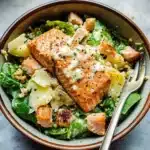
Ingredients
For the Perfectly Cooked Salmon:
- Salmon Fillets: 2 (around 6-7 ounces / 170-200g each), skin-on or skinless, depending on your preference. Opt for high-quality, sustainably sourced salmon like King, Sockeye, or Atlantic. The richness of the salmon is central to the dish.
- Olive Oil: 1 tablespoon. Extra virgin olive oil lends a subtle fruity note, but regular olive oil works too.
- Garlic Powder: ½ teaspoon. Adds a gentle, savoury aroma without the risk of burning fresh garlic.
- Onion Powder: ½ teaspoon. Complements the garlic powder for a rounded savoury base.
- Dried Dill: ½ teaspoon (optional, but recommended). Dill and salmon are a classic pairing, adding a fresh, herbaceous note.
- Salt: ½ teaspoon, or to taste. Use sea salt or kosher salt for better flavour.
- Black Pepper: ¼ teaspoon, freshly ground for the best flavour.
For the Hearty Grain Base:
- Quinoa: 1 cup, uncooked. Tricolor quinoa adds visual appeal, but white or red quinoa works perfectly. Quinoa offers a complete protein and a lovely fluffy texture. (Alternatively, use Farro, Brown Rice, or Barley – see tips section).
- Water or Vegetable Broth: 2 cups (or follow package instructions for your chosen grain). Using broth adds an extra layer of flavour.
- Salt: ¼ teaspoon (if using water). Omit if using salted broth.
For the Crisp Caesar Salad Element:
- Romaine Lettuce: 1 large head (about 10-12 ounces / 280-340g), washed, dried thoroughly, and chopped into bite-sized pieces. The crispness of Romaine is essential for a classic Caesar feel.
- Parmesan Cheese: ½ cup, freshly shaved or grated. Use a good quality Parmigiano-Reggiano for the best nutty, salty flavour. Reserve a little extra for garnish.
- Croutons: 1 cup. Use your favourite store-bought Caesar or garlic croutons, or make your own for superior texture and flavour (see tips!).
For the Creamy (Healthier) Homemade Caesar Dressing:
- Plain Greek Yogurt: ½ cup (full-fat or low-fat). This forms the creamy base, offering a healthier alternative to traditional raw egg yolks and excessive oil, while providing a pleasant tang and protein boost.
- Olive Oil: ¼ cup, extra virgin. Essential for richness and flavour emulsion.
- Lemon Juice: 2 tablespoons, freshly squeezed. Provides crucial acidity and brightness.
- Dijon Mustard: 1 tablespoon. Acts as an emulsifier and adds a sharp, tangy kick.
- Anchovy Paste: 1-2 teaspoons (or 2-3 minced anchovy fillets). This is key for the authentic umami depth of Caesar dressing. Adjust amount based on your preference for fishiness. Don’t skip it if you want true Caesar flavour!
- Garlic: 1 large clove, minced or pressed. Fresh garlic is essential here for pungent flavour.
- Worcestershire Sauce: 1 teaspoon. Adds another layer of savoury complexity and umami.
- Salt: ¼ teaspoon, or to taste (remember Parmesan and anchovy are salty).
- Black Pepper: ¼ teaspoon, freshly ground.
Optional Toppings & Garnishes:
- Cherry Tomatoes: ½ cup, halved. Adds a burst of sweetness, acidity, and colour.
- Avocado: ½ ripe avocado, sliced or diced. Brings extra creaminess and healthy fats.
- Fresh Parsley or Dill: Chopped, for garnish. Adds a touch of freshness and green.
- Lemon Wedges: For serving, allows individuals to add extra brightness.
- Red Pepper Flakes: A pinch for those who like a little heat.
Instructions
1. Cook the Grains:
* Rinse the quinoa thoroughly under cold running water using a fine-mesh sieve. This removes any bitterness from its natural coating (saponin).
* In a medium saucepan, combine the rinsed quinoa, water or vegetable broth, and salt (if using water).
* Bring the mixture to a boil over medium-high heat.
* Once boiling, reduce the heat to low, cover the saucepan tightly, and simmer for 15-20 minutes, or until all the liquid is absorbed and the quinoa is fluffy (you’ll see little “tails” sprout).
* Remove from heat and let it stand, covered, for 5 minutes.
* Fluff the quinoa gently with a fork. Set aside to cool slightly while you prepare the other components. If making ahead, spread it on a baking sheet to cool faster.
2. Prepare and Cook the Salmon:
* Pat the salmon fillets completely dry with paper towels. This is crucial for achieving a good sear (if pan-searing) or crispy skin.
* In a small bowl, combine the olive oil, garlic powder, onion powder, dried dill (if using), salt, and pepper.
* Brush this mixture evenly over all sides of the salmon fillets.
* Choose your cooking method:
* Pan-Searing (Recommended for flavour): Heat a large skillet (cast iron or non-stick) over medium-high heat. Add a tiny bit more oil if needed (about 1 tsp). Carefully place the salmon fillets in the hot skillet, skin-side down if using skin-on. Cook for 4-6 minutes, undisturbed, until the skin is crispy and golden brown, and the flesh is cooked about halfway up the side. Gently flip the fillets and cook for another 2-4 minutes on the other side, or until the salmon is cooked through but still moist. It should flake easily with a fork, and the internal temperature should reach 135-140°F (57-60°C) for medium. Avoid overcooking!
* Baking: Preheat your oven to 400°F (200°C). Place the seasoned salmon fillets on a baking sheet lined with parchment paper. Bake for 12-15 minutes, depending on the thickness of the fillets, or until cooked through.
* Air Frying: Preheat your air fryer to 380°F (190°C). Place the seasoned salmon fillets in the air fryer basket (skin-side down if applicable), ensuring they aren’t overcrowded. Air fry for 8-12 minutes, depending on thickness, until cooked through. No need to flip usually.
* Once cooked, transfer the salmon to a plate and let it rest for a few minutes. This allows the juices to redistribute, resulting in moister fish. You can then flake the salmon into large chunks using two forks, discarding the skin if desired (or leaving it on if crispy and you enjoy it).
3. Make the Homemade Caesar Dressing:
* While the salmon rests and grains cool, prepare the dressing.
* In a medium bowl or a jar with a tight-fitting lid, combine the Greek yogurt, olive oil, fresh lemon juice, Dijon mustard, anchovy paste, minced garlic, and Worcestershire sauce.
* Whisk vigorously (or shake the jar) until the dressing is smooth, creamy, and well emulsified.
* Taste the dressing and season with salt and freshly ground black pepper as needed. Remember that the Parmesan cheese added later will also contribute saltiness. Adjust lemon juice or anchovy paste if desired for more brightness or umami.
* Set aside. This dressing can be made ahead and stored in the refrigerator for up to 5 days.
4. Prepare the Salad Base:
* Ensure your chopped Romaine lettuce is thoroughly dried – excess water will dilute the dressing and make the salad soggy. A salad spinner is excellent for this.
* In a large salad bowl, combine the chopped Romaine lettuce, about half of the shaved/grated Parmesan cheese, and the croutons.
* Drizzle about half to two-thirds of the prepared Caesar dressing over the lettuce mixture.
* Gently toss the salad until the lettuce leaves are evenly coated with dressing. Don’t overdress initially; you can always add more later or serve extra on the side.
5. Assemble Your Salmon Caesar Salad Grain Bowls:
* Divide the cooked and slightly cooled quinoa evenly among your serving bowls (this recipe typically makes 2 large main course bowls or 4 smaller lunch-sized bowls). Create a bed of grains at the bottom.
* Top the quinoa generously with the dressed Caesar salad mixture (lettuce, Parmesan, croutons).
* Arrange the flaked cooked salmon over the salad greens.
* Drizzle any remaining Caesar dressing over the salmon and the rest of the bowl, if desired.
* Garnish generously with the remaining shaved/grated Parmesan cheese.
* Add any optional toppings you’re using: halved cherry tomatoes for colour and sweetness, sliced avocado for creaminess, a sprinkle of fresh parsley or dill for freshness.
* Serve immediately with lemon wedges on the side for squeezing over.
Nutrition
- Serving Size: One Normal Portion
- Calories: 750 - 900 kcal