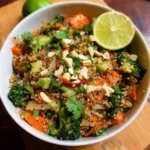
Ingredients
For the Quinoa:
- Quinoa: 1 cup (uncooked, any colour – white, red, or tri-colour work beautifully)
- This ancient grain is the foundation of our bowl, providing a complete protein source and a delightful, slightly nutty flavour. Rinsing it before cooking is key to removing any natural bitterness.
- Vegetable Broth or Water: 2 cups
- Using vegetable broth instead of water infuses the quinoa with an extra layer of subtle flavour right from the start.
- Salt: ¼ teaspoon (optional, if your broth is unsalted)
For the Colourful Vegetable Medley:
- Coconut Oil or Sesame Oil: 1 tablespoon (for sautéing)
- Coconut oil adds a hint of sweetness, while sesame oil imparts a deeper, nuttier aroma typical of Asian cuisine.
- Red Bell Pepper: 1 medium, thinly sliced
- Adds sweetness, a vibrant red hue, and a good dose of Vitamin C.
- Yellow or Orange Bell Pepper: 1 medium, thinly sliced
- Brings more colour, sweetness, and essential nutrients to the mix.
- Carrots: 2 medium, julienned or thinly sliced into matchsticks
- Provide a lovely crunch, sweetness, and a beta-carotene boost.
- Broccoli Florets: 1 ½ cups, cut into small, bite-sized pieces
- A nutritional powerhouse, broccoli adds a beautiful green and a satisfying texture when lightly cooked.
- Edamame: 1 cup, shelled (fresh or frozen and thawed)
- These young soybeans offer a pop of green, a pleasant chewy texture, and a significant protein punch.
- Red Onion: ½ medium, thinly sliced (optional, for a sharper bite)
- Adds a pungent kick and visual appeal if you enjoy its flavour profile.
- Garlic: 2 cloves, minced
- A foundational aromatic that builds depth of flavour in the sautéed vegetables.
- Fresh Ginger: 1 tablespoon, grated or finely minced
- Lends a warm, zesty spice that is quintessentially Thai.
For the Creamy Thai Peanut Sauce:
- Natural Creamy Peanut Butter: ½ cup (unsweetened is best)
- The heart of our sauce, providing richness, creaminess, and that irresistible nutty flavour.
- Low-Sodium Soy Sauce or Tamari (for gluten-free): ¼ cup
- Adds umami depth and saltiness. Tamari is a great gluten-free alternative.
- Fresh Lime Juice: 2 tablespoons (from about 1 large lime)
- Brings essential brightness and acidity to balance the richness of the peanut butter.
- Rice Vinegar: 1 tablespoon
- Adds another layer of tang and complexity to the sauce.
- Maple Syrup or Agave Nectar: 1-2 tablespoons (adjust to taste)
- Provides a touch of sweetness to balance the savoury and tangy elements. Start with less and add more if needed.
- Sesame Oil (Toasted): 1 teaspoon
- Imparts a deep, nutty, and aromatic flavour crucial for that authentic Thai taste.
- Sriracha or Red Pepper Flakes: ½ – 1 teaspoon (or to taste, for a touch of heat)
- Adjust the amount based on your preference for spiciness. A little goes a long way!
- Warm Water: 2-4 tablespoons (or more, to reach desired consistency)
- Helps to thin the sauce to a perfectly pourable, yet still creamy, consistency.
- Garlic Clove: 1 small, minced or grated (optional, for extra garlicky kick in the sauce)
- Fresh Ginger: ½ teaspoon, grated (optional, for extra zing in the sauce)
Instructions
Step 1: Cook the Quinoa – The Perfect Fluffy Base
- Rinse Thoroughly: Place the 1 cup of uncooked quinoa in a fine-mesh sieve. Rinse it under cold running water for at least 30 seconds, or until the water runs clear. This step is crucial for removing saponins, a natural coating that can give quinoa a bitter or soapy taste.
- Combine and Boil: In a medium saucepan, combine the rinsed quinoa, 2 cups of vegetable broth (or water), and ¼ teaspoon of salt (if using). Bring the mixture to a rolling boil over medium-high heat.
- Simmer Gently: Once boiling, reduce the heat to low, cover the saucepan with a tight-fitting lid, and let it simmer for 15 minutes. It’s important not to lift the lid during this time, as the steam is essential for cooking the quinoa perfectly.
- Rest and Fluff: After 15 minutes, remove the saucepan from the heat and let it stand, still covered, for another 5 minutes. This allows the quinoa to absorb any remaining moisture and finish steaming.
- Fluff with a Fork: Uncover the quinoa and gently fluff it with a fork. You’ll know it’s perfectly cooked when the grains are translucent, and the germ (a little spiral) has separated. Set aside, covered, to keep warm.
Step 2: Prepare the Vegetables – A Symphony of Crunch and Colour
- Prep the Aromatics: While the quinoa is cooking, prepare your vegetables. Thinly slice the red, yellow (or orange) bell peppers, and red onion (if using). Julienned or thinly slice the carrots. Cut the broccoli into small, manageable florets. Mince the 2 cloves of garlic and grate or finely mince the 1 tablespoon of fresh ginger for the vegetable sauté.
- Sauté the Hardy Veggies: Heat the 1 tablespoon of coconut oil (or sesame oil) in a large skillet or wok over medium-high heat. Once the oil is shimmering, add the sliced carrots and broccoli florets. Sauté for 3-4 minutes, stirring occasionally, until they begin to soften but remain crisp-tender.
- Add Softer Veggies and Aromatics: Add the sliced bell peppers and red onion (if using) to the skillet. Continue to sauté for another 2-3 minutes.
- Incorporate Aromatics and Edamame: Stir in the minced garlic and grated ginger. Cook for another minute until fragrant – be careful not to burn the garlic. Finally, add the shelled edamame and cook for 1-2 minutes more, just until heated through. The vegetables should be vibrant and crisp-tender, not mushy.
- Season Lightly (Optional): You can add a tiny pinch of salt and pepper to the vegetables if desired, but remember the peanut sauce will add a lot of flavour. Remove from heat and set aside.
Step 3: Whisk Up the Divine Thai Peanut Sauce – The Soul of the Bowl
- Combine Ingredients: In a medium bowl, combine the ½ cup of natural creamy peanut butter, ¼ cup of low-sodium soy sauce (or tamari), 2 tablespoons of fresh lime juice, 1 tablespoon of rice vinegar, 1-2 tablespoons of maple syrup (or agave), 1 teaspoon of toasted sesame oil, and ½ – 1 teaspoon of Sriracha (or red pepper flakes). If you’re adding extra garlic or ginger to the sauce, include it here as well (1 small minced garlic clove, ½ teaspoon grated ginger).
- Whisk Until Smooth: Whisk all the ingredients together vigorously until well combined and smooth. The mixture will likely be quite thick at this point.
- Adjust Consistency: Gradually add 2-4 tablespoons of warm water, one tablespoon at a time, whisking continuously, until the sauce reaches your desired consistency. It should be pourable but still rich and creamy, able to coat the back of a spoon. Taste and adjust seasonings if necessary – you might want a little more lime for tang, sweetener for sweetness, or Sriracha for heat.
Step 4: Assemble Your Thai Veggie Quinoa Bowls – The Grand Finale!
- Create the Base: Divide the cooked, fluffed quinoa equally among 4 serving bowls. This forms the hearty and nutritious foundation.
- Layer the Veggies: Artfully arrange a generous portion of the colourful sautéed vegetable medley on top of the quinoa in each bowl. Try to distribute the different types of vegetables evenly for visual appeal and balanced flavour in every bite.
- Drizzle Generously with Peanut Sauce: Now for the best part! Drizzle a liberal amount of the prepared Thai peanut sauce over the vegetables and quinoa. Don’t be shy – this sauce is what brings everything together! You can also serve extra sauce on the side for those who like it extra saucy.
- Garnish with Flair: Sprinkle your chosen garnishes over each bowl. Chopped fresh cilantro, roasted peanuts, sesame seeds, and sliced green onions all add wonderful finishing touches of flavour, texture, and visual appeal.
- Serve Immediately: Place a lime wedge on the side of each bowl for a final spritz of freshness. Serve your beautiful Thai Veggie Quinoa Bowls immediately while warm and enjoy the explosion of flavours!
Nutrition
- Serving Size: One Normal Portion
- Calories: 500-600