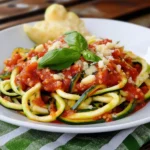
Ingredients
Scale
- 4 Medium Zucchinis: Zucchini forms the heart of this recipe, providing a healthy and delicious base for your “noodles.” Opt for medium-sized zucchinis that are firm to the touch and have smooth, unblemished skin. Larger zucchinis can sometimes be seedy and watery, which might affect the texture of your noodles. When selecting zucchinis, look for a deep green color, indicating freshness. Organic zucchinis are always a great choice if available, as they are grown without synthetic pesticides. Before spiralizing, ensure you wash the zucchinis thoroughly under cool running water and trim off the ends. There’s no need to peel the zucchini as the skin is tender and adds both color and nutritional value. If you find yourself with slightly older zucchinis, you might want to remove the seedy core after spiralizing, as it can be a bit watery.
- 2 Cups Marinara Sauce: A good quality marinara sauce is crucial for bringing flavor and richness to your zucchini noodles. You have the option to use store-bought or homemade marinara sauce. For a quick weeknight meal, store-bought marinara is perfectly acceptable. When choosing a store-bought sauce, look for options with simple ingredient lists, avoiding those with excessive added sugar, salt, or artificial preservatives. Brands that use high-quality tomatoes, olive oil, garlic, and herbs will generally yield the best flavor. If you prefer to make your own marinara sauce, the possibilities are endless! A simple homemade marinara can be made with crushed tomatoes, garlic, onions, olive oil, basil, oregano, salt, and pepper. Making your own sauce allows you to control the ingredients and customize the flavor profile to your liking. For a richer sauce, you can simmer it for a longer period to allow the flavors to meld together beautifully. Whether store-bought or homemade, ensure your marinara sauce is flavorful and well-seasoned, as it’s the primary sauce for your zucchini noodles.
- 1 Pound Cooked Meatballs (Store-Bought or Homemade): Meatballs add protein and heartiness to this dish, making it a more substantial and satisfying meal, especially for growing kids. You have the flexibility to use store-bought or homemade meatballs. Store-bought meatballs are a convenient option for busy weeknights. When choosing store-bought meatballs, opt for those made with quality meat (beef, turkey, or a combination), and check the ingredient list for minimal additives and fillers. Pre-cooked meatballs are readily available in the refrigerated or frozen sections of most supermarkets. If using frozen meatballs, ensure they are fully thawed and heated through according to package instructions before adding them to the marinara sauce. Homemade meatballs, while requiring a bit more effort, are incredibly rewarding in terms of flavor and customization. You can make meatballs using ground beef, ground turkey, ground chicken, or even a vegetarian option with lentils or beans. Season your homemade meatballs with breadcrumbs, eggs, parmesan cheese, garlic, onions, herbs like parsley and oregano, salt, and pepper. You can bake, pan-fry, or simmer your meatballs in the marinara sauce itself. Simmering them directly in the sauce infuses them with flavor and keeps them moist. For a kid-friendly twist, consider smaller-sized meatballs that are easier for children to eat.
- 1 Tablespoon Olive Oil: Olive oil is used for sautéing the zucchini noodles. It adds a subtle richness and prevents the noodles from sticking to the skillet. Extra virgin olive oil is a healthy and flavorful choice. When sautéing zucchini noodles, a tablespoon is usually sufficient, but you may need to adjust slightly depending on the size of your skillet and the amount of zucchini noodles you are cooking at once. Ensure the olive oil is heated properly before adding the zucchini noodles to achieve a nice sauté without letting the oil smoke.
- Salt and Pepper to Taste: Salt and pepper are essential seasonings to enhance the flavors of both the zucchini noodles and the marinara sauce. Season the zucchini noodles with salt and pepper while sautéing to bring out their natural sweetness and balance the flavors. Similarly, taste your marinara sauce and meatballs and adjust the seasoning with salt and pepper as needed. Remember to season in layers, tasting as you go, to avoid over-seasoning. Freshly ground black pepper is always preferable for its more robust flavor compared to pre-ground pepper. For salt, sea salt or kosher salt are excellent choices.
- Optional: Grated Parmesan Cheese for Serving: Parmesan cheese adds a salty, savory, and slightly nutty flavor that complements the zucchini noodles, marinara sauce, and meatballs beautifully. It also adds a touch of elegance to the presentation. Freshly grated Parmesan cheese is always superior in flavor to pre-grated cheese. You can use a microplane or a fine grater to achieve a delicate, fluffy texture. If you don’t have Parmesan cheese on hand, other hard cheeses like Pecorino Romano or Grana Padano would also work well. For a dairy-free option, you can use nutritional yeast, which provides a cheesy, umami flavor. Parmesan cheese is entirely optional but highly recommended for those who enjoy cheese with their pasta dishes. It’s best to offer Parmesan cheese as a topping at the table, allowing everyone to add as much or as little as they prefer.
Instructions
- Prepare the Zucchini Noodles: The first step is to transform your zucchinis into noodles. The most efficient tool for this is a spiralizer. There are various types of spiralizers available, from handheld to countertop models. Choose one that suits your budget and kitchen space. To spiralize the zucchini, wash and trim the ends of each zucchini. If using a handheld spiralizer, place the zucchini in the center and twist, applying gentle pressure. For a countertop spiralizer, secure the zucchini according to the manufacturer’s instructions and crank the handle to create noodles. Spiralize all four zucchinis. If you don’t have a spiralizer, don’t worry! You can still make zucchini noodles using a vegetable peeler or a julienne peeler. For a vegetable peeler, simply peel long, thin strips of zucchini lengthwise, rotating the zucchini as you go, until you reach the seedy core. For a julienne peeler, use it lengthwise to create thin, matchstick-like noodles. While spiralized noodles resemble pasta more closely, both vegetable peeler and julienne peeler methods will yield delicious and healthy zucchini noodles. Once you have your zucchini noodles, gently pat them dry with paper towels. Zucchinis naturally contain a lot of moisture, and removing excess water will help prevent the noodles from becoming soggy when sautéed. This step is crucial for achieving perfectly tender-crisp zucchini noodles.
- Sauté the Zucchini Noodles: Now it’s time to cook the zucchini noodles. Place a large skillet on your stovetop over medium heat. Add 1 tablespoon of olive oil to the skillet and let it heat up for a minute or two until it shimmers. Ensure the skillet is large enough to accommodate all the zucchini noodles without overcrowding. Overcrowding can lead to steaming instead of sautéing, resulting in soggy noodles. Once the oil is hot, add the zucchini noodles to the skillet. Season them generously with salt and pepper. Salt helps draw out excess moisture and enhances the flavor, while pepper adds a touch of spice. Sauté the zucchini noodles for approximately 3-4 minutes, stirring frequently with tongs or a spatula. The goal is to cook them until they are tender-crisp, meaning they are slightly softened but still have a bit of bite and haven’t become mushy. Avoid overcooking the zucchini noodles, as they can become watery and lose their texture. Keep an eye on them and taste a noodle to check for doneness. They should be bright green and slightly softened. Once sautéed to your liking, remove the skillet from the heat and set aside.
- Heat the Marinara Sauce and Meatballs: While the zucchini noodles are sautéing, prepare the marinara sauce and meatballs. In a separate saucepan, pour in 2 cups of marinara sauce. Place the saucepan over medium heat and let the marinara sauce warm up gently. If you are using pre-cooked meatballs, add them to the marinara sauce now. If you are using frozen meatballs, ensure they are thawed beforehand and heated through in the sauce. If you are using homemade meatballs that are already cooked, add them to the sauce to warm through. If your homemade meatballs are uncooked, you can simmer them directly in the marinara sauce until they are cooked through. This will infuse the meatballs with the delicious flavor of the sauce. Stir the marinara sauce and meatballs occasionally to ensure even heating and prevent sticking. Heat until the sauce is simmering gently and the meatballs are heated through, which should take about 5-7 minutes. Taste the marinara sauce and meatballs and adjust seasoning with salt and pepper if needed. You can also add a pinch of red pepper flakes for a touch of heat, or a sprinkle of dried oregano or basil for extra flavor.
- Plate and Serve: The final step is to assemble and serve your Zucchini Noodles with Marinara and Meatballs. Divide the sautéed zucchini noodles among plates or bowls. A serving size of zucchini noodles is typically about 1-1.5 cups per person. Ladle a generous amount of marinara sauce and meatballs over the zucchini noodles. Aim for about ½ cup of marinara sauce and 2-3 meatballs per serving, depending on the size of the meatballs and your family’s appetite. If desired, sprinkle grated Parmesan cheese over the top of each serving. Parmesan cheese adds a wonderful savory and salty finish. Freshly chopped basil or parsley can also be used as a garnish for added freshness and visual appeal. Serve immediately while the dish is warm and enjoy your healthy and delicious Zucchini Noodles with Marinara and Meatballs!
Nutrition
- Serving Size: One Normal Portion
- Calories: 350-450
- Fat: 15-25 grams
- Carbohydrates: 20-30 grams
- Fiber: 5-7 grams
- Protein: 25-35 grams